
How to Clean Stone Garden Ornaments: Moss, Algae & Stain Removal
Written by Matt W on 9th Mar 2026.
Cast stone garden ornaments clean safest with warm water, pH-neutral soap, and a soft-bristle brush. Vinegar removes algae but dissolves limestone and marble surfaces permanently. Pressure washers strip fine detail from cast stone within seconds. Baking soda paste lifts green algae without chemical damage. Each stone type -- cast, natural, and reconstituted -- reacts differently to cleaning agents, so matching the method to the material prevents irreversible harm.
Matt W | Garden Ornament Specialist
Key Takeaways
- ✓ Warm soapy water and a soft brush is the safest cleaning method for all stone types
- ✓ Never use a pressure washer on stone ornaments -- it strips carved detail and forces water into micro-cracks
- ✓ Vinegar works on concrete and cast stone but permanently etches limestone, marble, and sandstone
- ✓ Baking soda paste (3:1 ratio with water) removes green algae in 15 minutes without surface damage
- ✓ Clean bird baths weekly in summer to prevent algae becoming embedded in the stone grain
- ✓ Some patina and lichen adds value and character -- not every ornament needs to look brand new
Matt's Experience
We have been selling stone garden ornaments for over a decade. Every spring we get the same emails: customers who scrubbed a limestone piece with vinegar and watched the surface fizz and dissolve. Others who blasted a detailed cast stone statue with a pressure washer and stripped off every fine feature in thirty seconds. The right cleaning method takes five minutes. The wrong one causes permanent damage. This article gives you the exact method for each stone type we sell, based on what we have seen go wrong hundreds of times.
How to clean cast stone garden ornaments
Cast stone (reconstituted limestone) is the most common material in UK garden ornaments. It is dense, durable, and tolerates gentle cleaning well. The key word is gentle. Cast stone is made from crushed limestone bound with cement, so it shares some vulnerability with natural limestone if you use the wrong chemicals.
Fill a bucket with warm water and add a few drops of pH-neutral washing-up liquid. Fairy Original works well. Dip a soft-bristle brush -- a washing-up brush or soft shoe brush -- and scrub the surface in small circular motions. Work from the top down so dirty water runs off areas you have not cleaned yet. Rinse with clean water from a watering can or garden hose on a gentle setting.
For stubborn dirt in carved details, use a soft toothbrush to reach crevices. Never use wire brushes or metal scrapers. Cast stone has a deliberately textured surface that traps dirt in the grain. Aggressive scrubbing smooths that texture and makes the ornament look artificial. Our range of stone garden ornaments is made from hand-finished cast reconstituted stone, and every piece benefits from this gentle approach.
| Stone Type | Safe Cleaners | Avoid | Drying Time | Risk Level |
|---|---|---|---|---|
| Cast stone (reconstituted) | Soap & water, baking soda | Acid cleaners, pressure washers | 24-48 hours | Low |
| Natural limestone | Water only, pH-neutral cleaner | Vinegar, lemon, any acid | 48-72 hours | High |
| Sandstone | Water, very mild soap | Bleach, acid, stiff brushes | 48-72 hours | High |
| Marble | Distilled water, specialist marble cleaner | Vinegar, bleach, all acids | 24 hours | Very high |
| Granite | Soap, baking soda, dilute bleach | Hydrofluoric acid | 12-24 hours | Very low |
| Concrete | Soap, baking soda, dilute bleach | Pressure washers on old pieces | 24-48 hours | Medium |
How to remove green algae from stone statues
Green algae is the most common cleaning problem on UK stone ornaments. It thrives in damp, shaded conditions and can cover a statue within a single wet season. The good news is that algae sits on the surface and has shallow root structures, so it comes off without harsh chemicals.
Make a paste from three parts baking soda to one part water. Spread it over the green areas with a soft cloth or old paintbrush. Leave it for 15-20 minutes. The mild alkalinity of the baking soda kills the algae without affecting the stone. Scrub with a soft-bristle brush and rinse thoroughly with clean water. One application removes most surface algae. Heavily colonised pieces may need a second treatment after 48 hours.
For ornaments in permanently shaded spots, prevention matters more than cleaning. Move the piece to a position that gets at least 3-4 hours of direct sunlight. UV light inhibits algae growth naturally. If moving is not practical, apply a silane/siloxane breathable sealant after cleaning. This reduces moisture absorption by 85-90% and starves algae of the damp surface it needs. Our weatherproofing guide covers sealant application in detail.
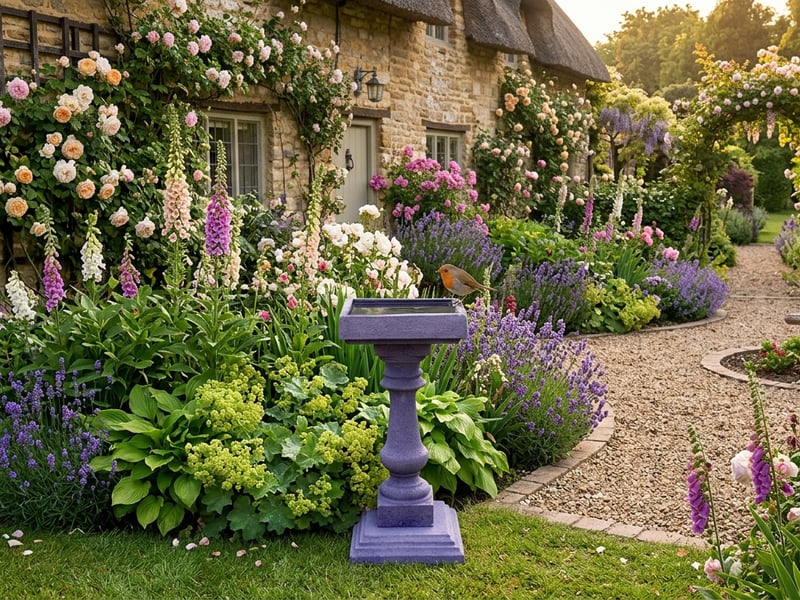
Shop the Baluster Stone Birdbath →
How to clean moss and lichen off garden ornaments
Moss and lichen are different organisms from algae, and they need different treatment. Moss has roots (rhizoids) that grip into the stone surface. Lichen is a symbiosis of fungus and algae that bonds chemically to stone. Both take longer to remove than surface algae.
Start by scraping off the bulk of the moss or lichen with a wooden or plastic scraper. Never use metal -- it scratches stone and leaves grey marks. Once the bulk is removed, scrub the area with warm soapy water and a stiff nylon brush. For moss in deep crevices, pour boiling water directly onto the growth. The heat kills the root structure without chemicals.
Lichen is harder. It resists soap and water because the fungal layer protects it from moisture. A solution of one part household bleach to ten parts water works on grey/white cast stone. Brush it on, leave for 10 minutes, scrub, and rinse. But never use bleach on coloured, painted, or dark stone -- it causes permanent discolouration. For dark stone ornaments, a specialist biological cleaner containing benzalkonium chloride kills lichen over 2-3 weeks without bleaching the surface. Check our full care and maintenance guide for ongoing upkeep after cleaning.
Can you use a pressure washer on stone ornaments?
No. This is the single most damaging mistake people make with stone garden ornaments. A domestic pressure washer operates at 100-150 bar (1,450-2,175 PSI). That concentrated jet strips carved detail from cast stone in seconds. Fingers, facial features, decorative edges -- all the elements that make a hand-finished ornament worth owning get blasted smooth.
The damage goes deeper than appearance. High-pressure water forces moisture into micro-cracks and pores that would normally stay dry. That trapped water then expands during the next frost, causing internal cracking. You may not see the damage until months later when a chunk of stone falls away.
Historic England specifically advises against pressure washing any stone -- their conservation guidelines note that it causes "irreversible loss of surface detail and accelerated decay." If a garden centre or cleaning product website tells you pressure washing stone is fine, they are wrong. Our materials guide explains why cast stone's surface texture is what gives it character and natural ageing ability. Destroying that surface defeats the purpose.
The only acceptable powered cleaning is a garden hose on its gentlest spray setting, held at least 300mm from the stone. That provides enough water flow to rinse cleaning solutions without the destructive pressure.
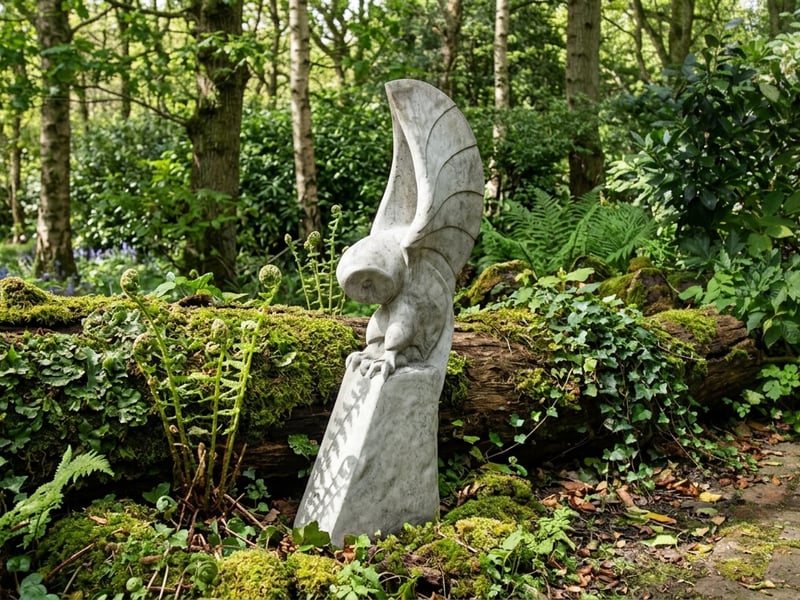
Shop the Barn Owl Stone Ornament →
Cleaning stone bird baths safely
Bird baths need more frequent cleaning than statues because standing water accelerates algae and limescale build-up. A birdbath left uncleaned for a full summer can develop algae layers so thick they become embedded in the stone grain and resist normal scrubbing.
Empty the bowl completely once a week during summer. Scrub the basin with a stiff nylon brush and warm water -- no soap, because soap residue harms birds. For stubborn green algae in the bowl, use the baking soda paste method: three parts baking soda to one part water, spread across the basin, leave 15 minutes, scrub, and rinse at least three times to remove all residue before refilling.
Limescale build-up appears as white crusty deposits, especially in hard water areas of southern and eastern England. White vinegar (diluted 1:4 with water) dissolves limescale effectively. But only use it on the inner basin surface of cast stone or concrete birdbaths -- never on the pedestal or outer surfaces, and never on limestone or marble bowls. Rinse at least five times after using vinegar. A better long-term solution is filling your birdbath with rainwater from a water butt. Rainwater is naturally soft and produces almost no limescale. Browse our full collection of garden ornaments for birdbaths designed to withstand year-round outdoor use.
When to clean vs when to leave the patina
Not every stone ornament needs to look freshly carved. Natural patina -- the greying and gentle weathering that develops over years -- adds character and value to cast stone. Many of our customers specifically choose stone over resin because they want that aged, lived-in look.
Clean when algae is thick enough to obscure detail, when bird droppings are fresh (they are acidic and etch stone), when a birdbath bowl is slimy, or when dark stains from fallen leaves have built up. These are maintenance issues that worsen if ignored.
Leave patina alone when it is a thin, even grey tone across the surface. Leave lichen patches if they sit flat against the stone and are not lifting edges. Leave light moss in crevices where it adds a natural look. Our guide to ageing a garden statue shows how some customers actively encourage patina growth on new pieces. Cleaning that off would undo months of deliberate ageing.
The Historic England stone cleaning guidance makes the same point about heritage buildings: patina is often protective, and removing it can expose fresh stone to faster weathering. The principle applies equally to garden ornaments.
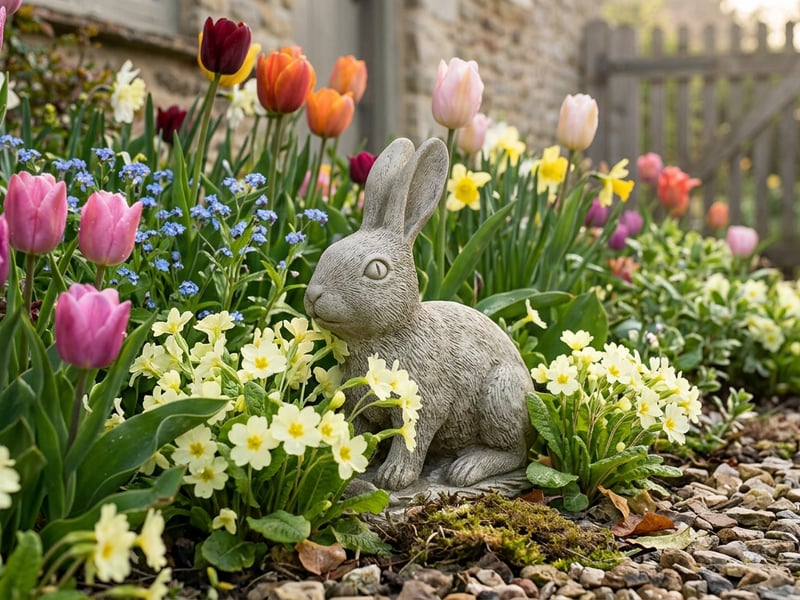
Shop the Cheeky Rabbit Garden Ornament →
|
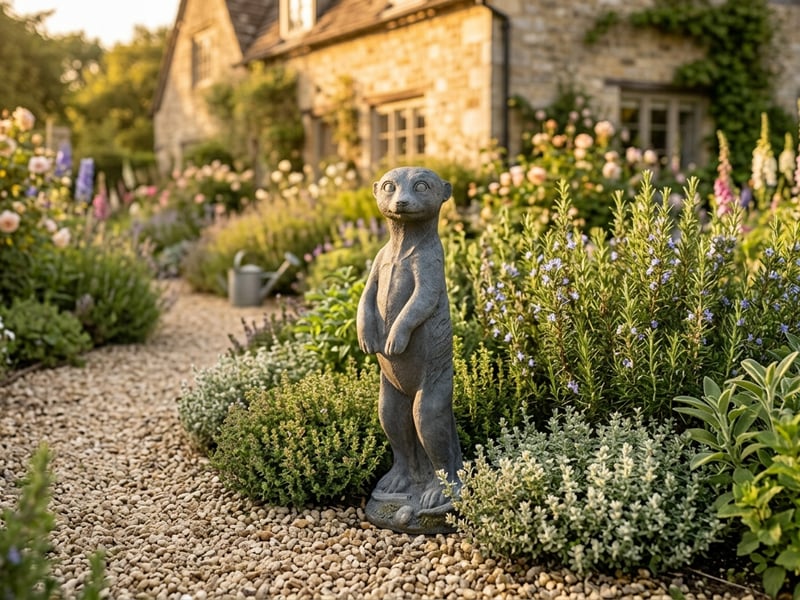
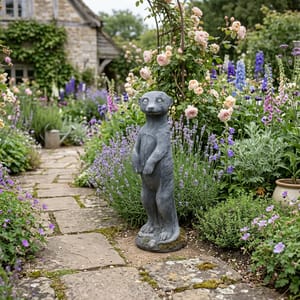
Matt's Pick for Easy-Clean Stone OrnamentsBest For: Low-maintenance gardens that still want character Why I Recommend It: This meerkat is cast reconstituted stone with a smooth finish that algae struggles to grip. A 5-minute wipe-down with soapy water once a year keeps it looking perfect. I have seen this piece in gardens after 8 years and it develops a beautiful natural patina without ever looking dirty. Price: £80 |
Matt's Tip: The Toothbrush Test
Before using any cleaning product on a stone ornament, test it on a hidden spot first. I always use the underside of the base. Apply your chosen cleaner to a 20mm patch, leave it for the full recommended time, then rinse and check for discolouration or surface etching. This takes two minutes and has saved me from ruining several expensive pieces over the years. If the test patch changes colour or feels rougher to the touch, do not use that product on the visible surfaces.
Further reading
- How to Stop Garden Statues Falling Over: Bases, Adhesives and Fixing Methods
- Stone vs Resin: Which Garden Ornament Material Is Best?
- How to Position Stone Garden Ornaments in Your Garden
- Top 10 Stone Garden Ornaments for UK Gardens
- Sustainable Garden Ornaments: Eco-Friendly Decorative Solutions
Frequently asked questions
Can you use a pressure washer on stone garden ornaments?
No, pressure washers permanently destroy carved detail on stone garden ornaments within seconds. A domestic pressure washer runs at 100-150 bar, which strips the hand-finished surface texture from cast stone, erodes carved features, and forces water into micro-cracks that cause frost damage later. Use a garden hose on a gentle spray setting instead. Historic England advises against pressure washing any stone surfaces due to irreversible loss of surface detail.
Will vinegar damage my stone garden statue?
Vinegar dissolves limestone, marble, and sandstone on contact, causing permanent surface etching. The acetic acid in vinegar reacts with calcium carbonate, which is the primary component of these stones. You will see fizzing where the acid attacks the surface. Cast stone and concrete tolerate dilute vinegar (1:4 with water) for short periods, but test on a hidden area first. For limestone and marble pieces, use only pH-neutral cleaners or plain warm water.
How do you remove green algae from cast stone?
A paste of three parts baking soda to one part water removes green algae from cast stone in 15 minutes. Spread the paste over the affected area, leave it to work, then scrub with a soft-bristle brush and rinse with clean water. The mild alkalinity kills algae without damaging the stone. For heavy infestations, repeat after 48 hours. Moving the ornament to a sunnier position prevents regrowth, as UV light naturally inhibits algae.
What is the best time of year to clean stone ornaments?
Late March to early May is the best time to clean stone garden ornaments in the UK. Winter frost has finished, so freshly cleaned stone will not suffer freeze-thaw damage while still damp from washing. Spring cleaning removes winter grime before the growing season when algae growth accelerates. Allow 48-72 hours of dry weather after cleaning before applying any sealant. A second light clean in September prepares ornaments for winter.
Should I remove lichen or leave it for character?
Flat lichen that sits flush against the stone surface is harmless and adds valued character to garden ornaments. Many gardeners and conservation bodies consider lichen a sign of age and quality. Only remove lichen if it is lifting stone edges, growing in thick crusty layers that trap moisture, or obscuring carved detail you want to see. Crustose lichen (the flat type) is purely cosmetic. Foliose lichen (the leafy, raised type) can trap moisture against the stone and should be gently scraped away on vulnerable pieces.
Can I use bleach on reconstituted stone ornaments?
Dilute household bleach (1:10 with water) is safe on grey and white reconstituted stone only. Apply with a brush, leave for 10 minutes maximum, scrub, and rinse thoroughly with clean water. Never use bleach on coloured, painted, or dark-finished stone -- it causes permanent discolouration and pale patches. Never use bleach near planted borders as it kills soil organisms. For coloured stone, a specialist biological cleaner containing benzalkonium chloride is the safer alternative.
Browse Our Stone Garden Ornament Collection
Every piece is cast from reconstituted limestone and frost-tested for UK gardens. Simple to clean, built to last decades outdoors.
View Stone OrnamentsMatt W
Garden & Outdoor Specialist
Matt has spent over 16 years working hands-on with garden products across the UK. He tests materials in Staffordshire clay soil and hard water conditions, and writes from direct experience fitting, maintaining, and repairing everything from stone statues to cast iron furniture. His advice is based on what actually survives a British winter, not what looks good in a catalogue.