
Garden Mirrors: How to Use Outdoor Mirrors to Create Space and Light
Written by Matt W on 10th Mar 2026.
Garden mirrors are one of the simplest ways to make a small outdoor space feel twice its actual size. A well-placed outdoor mirror reflects natural light into shaded corners, creates the illusion of depth against boundary walls, and amplifies the visual impact of planting and ornaments. Acrylic mirrors rated for outdoor use cost from £120 to £300 depending on size and frame style. They are safe for UK weather year-round when properly sealed.
Mirrors work best when they have something worth reflecting. A stone fountain, a bird bath, or a carefully positioned statue creates a focal point that the mirror doubles, giving a small garden the presence of a much larger space. This guide covers where to position outdoor mirrors, which materials survive the British climate, and how to avoid the safety pitfalls that catch people out. Browse our full collection of garden ornaments for pieces that pair brilliantly with mirror-backed designs.
Key Takeaways
- ✓ A single outdoor mirror can visually double a small garden's apparent size
- ✓ UV-stabilised acrylic is the safest and most durable material for UK outdoor mirrors
- ✓ Position mirrors to reflect greenery and ornaments, not blank walls or fences
- ✓ Flat mirrors do not cause fires — only concave mirrors concentrate sunlight
- ✓ Avoid hanging mirrors during spring breeding season to protect garden birds
- ✓ Pair with stone ornaments and water features for maximum visual impact
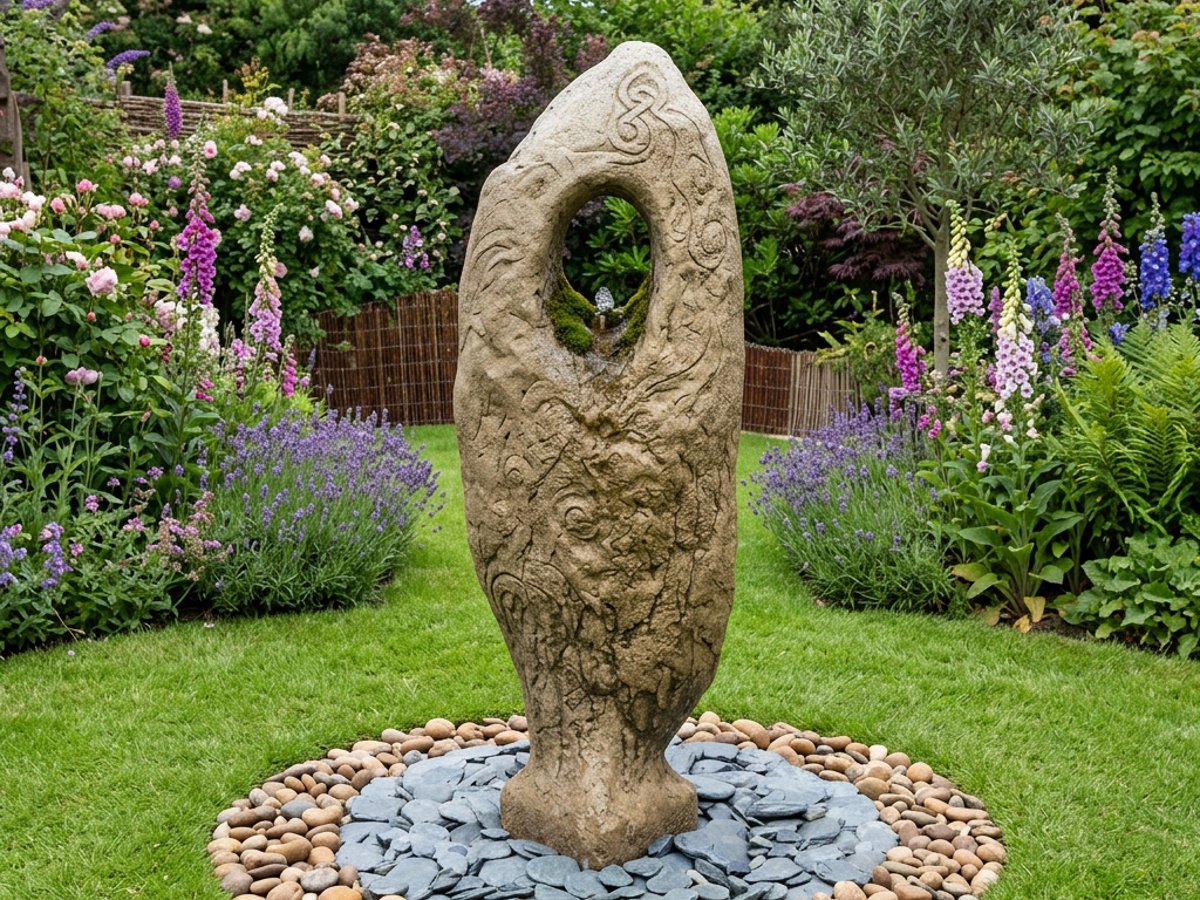
Shop the Celtic Stone Fountain →
Installer's Note
We have fitted mirrors in around 30 small garden projects, mostly in terraced houses and courtyard spaces. The single biggest mistake people make is hanging the mirror too high. Eye level is where the illusion works. If the mirror catches sky instead of foliage, it just looks like a shiny rectangle on a fence. The second mistake is leaving the frame edge fully visible. Tuck climbing plants or a trellis around the edges and suddenly it looks like a window into a second garden.
Do garden mirrors really make a garden look bigger?
A well-positioned outdoor mirror can make a garden appear up to twice its actual depth. The effect works the same way as mirrors in small restaurant interiors: by reflecting the space back at the viewer, the eye reads the combined real and reflected depth as one continuous area. The taller the mirror, the stronger the effect. A full-length arched mirror creates the impression of a doorway leading to another garden entirely.
The illusion works best when the mirror reflects open green space rather than hard surfaces. Position it at the end of a border facing inward so it captures flowers, foliage, and lawn. If the mirror reflects a fence panel or a wall, the effect falls flat. The trick is to make the viewer forget the mirror is there. Once climbing plants or a low hedge partially frame the edges, most visitors do a genuine double-take before realising what they are looking at.
Multiple smaller mirrors at different angles create a layered depth effect on larger patios. Three 60cm round mirrors in a cluster add more visual interest than a single large rectangular piece. Both approaches work — the choice depends on the style of garden.
Where is the best place to put a garden mirror?
The best position is flat against a wall or fence, facing inward, at eye level, reflecting the greenest part of your garden. End-of-garden fence panels are the most popular spot because they create maximum depth illusion. The mirror appears to open up the space beyond the boundary. Behind a seating area works well too, because guests see the reflected garden behind them without needing to turn around.
Dark, shaded corners benefit enormously from a mirror. A north-facing wall that receives little direct sunlight will bounce reflected light from the brighter parts of the garden. This brightens the area noticeably and makes plants in the shade appear more vivid. Pair a mirror in a dark corner with a stone ornament or water feature in front of it. The reflection doubles the focal point and draws the eye toward a part of the garden that otherwise gets ignored. Our sculpture placement guide covers how to create focal points that anchoring designs like this.
Avoid positions where reflected sunlight could cause glare into windows or seating areas. South-facing walls in direct summer sun are not ideal — the glare is uncomfortable and the mirror surface degrades faster under prolonged UV exposure.
What type of mirror is best for outdoor use in the UK?
UV-stabilised acrylic (Perspex) is the safest and most durable material for outdoor garden mirrors in the British climate. It has 10 times the impact resistance of glass, weighs half as much, and will not shatter if knocked by wind-blown debris. Modern UV-stabilised versions resist yellowing for 10+ years. Glass mirrors rated for outdoor use do exist, but they require frost-protected coatings and careful mounting to prevent shattering in sub-zero temperatures.
| Material | Impact Resistance | Weight | UV Resistance | Frost-Proof | Price Range | Best For |
|---|---|---|---|---|---|---|
| UV-stabilised acrylic | 10x glass | Half of glass | 10+ years | Yes | £80-£250 | Most UK gardens |
| Frost-protected glass | Standard | Heavy | Excellent | With coating | £120-£350 | Sheltered positions |
| Aluminium composite | Very high | Light | Excellent | Yes | £150-£400 | Exposed, damp areas |
| Stainless steel | Unbreakable | Medium | Excellent | Yes | £200-£500 | Contemporary gardens |
For frames, powder-coated metal or treated hardwood both handle UK weather well. Avoid untreated softwood frames — they warp and rot within two to three seasons. Wrought iron frames in arched or Gothic window shapes are the most popular style for traditional gardens.
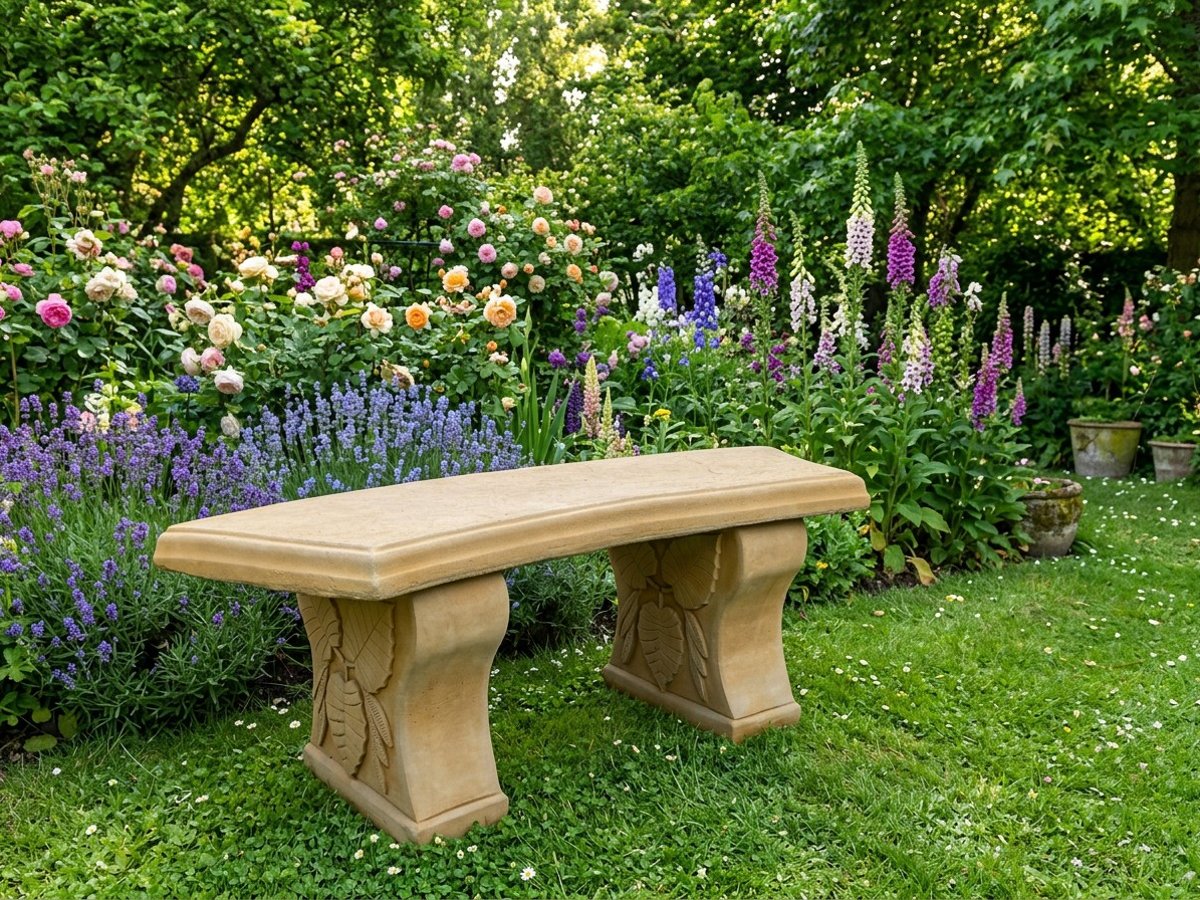
Shop the Curved Leaf Stone Garden Bench →
Can garden mirrors cause fires?
Flat garden mirrors cannot cause fires because they scatter reflected light rather than concentrating it. Only concave (curved inward) mirrors focus sunlight to a single point hot enough to ignite dry material. UK fire services have issued warnings about concave mirrors during heatwaves, but standard flat outdoor mirrors pose no fire risk. This is a common concern that stops people from using mirrors outdoors when the risk is actually near zero for the correct type.
If you want to eliminate any doubt, position the mirror on a north-facing wall or in a spot that receives shade during the hottest part of the day. Keep the area in front of the mirror free of dry leaves and paper. These are sensible precautions for any garden, mirror or not.
Are garden mirrors safe for birds?
Garden mirrors can confuse birds during the spring breeding season when males attack their own reflections, mistaking them for rival birds. Robins and blackbirds are the worst affected in UK gardens. They can injure themselves by repeatedly flying at the mirror. The RSPB recommends avoiding large, clear mirrors at bird height during March to July.
Practical solutions exist. Frosted or antiqued mirrors with surface imperfections break up the reflection enough to reduce bird strikes without losing the decorative effect. Position mirrors away from bird feeders and known flight paths. If you already have a clear mirror, drape a lightweight net or muslin cloth over it during peak breeding months (April to June). After July, the territorial behaviour stops and the mirror is safe to expose again.
Bird baths and feeders draw birds to specific parts of the garden. Keep mirrors in a different zone. Our bird bath buying guide covers placement for maximum wildlife benefit without conflict with other garden features.
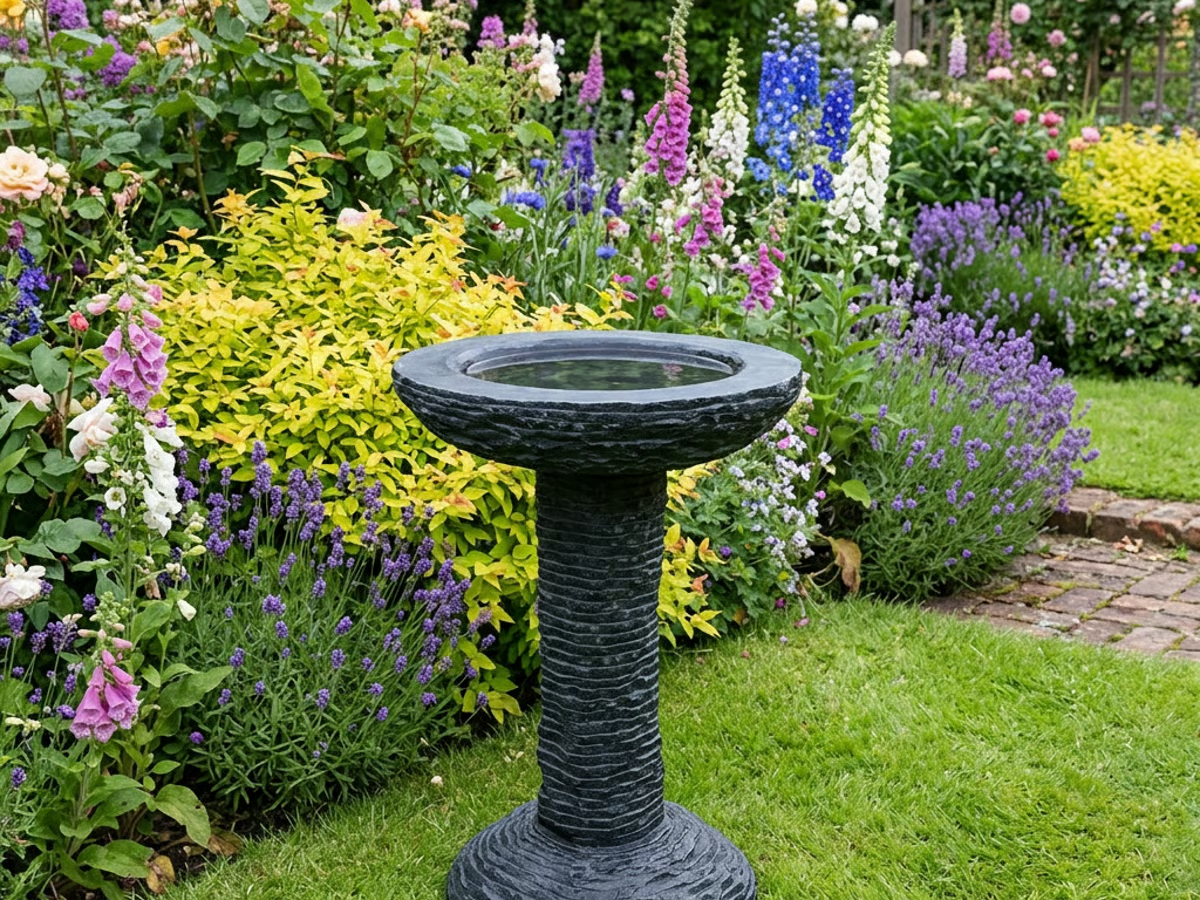
Shop the Cascade Black Limestone Bird Bath →
How do you weatherproof a garden mirror?
Seal all frame joints and the mirror's rear edge with outdoor-rated silicone sealant before hanging it. Moisture creeping behind the reflective coating is what kills outdoor mirrors. Once water gets between the mirror surface and the backing, black spots appear and spread. Re-sealing annually — ideally in September before autumn rain begins — prevents this entirely.
For wooden frames, apply an exterior wood treatment or microporous paint once a year. Metal frames need checking for rust spots at joints where powder coating chips over time. Sand any rust back to clean metal and touch up with a rust-inhibiting metal paint. Store the mirror indoors during extended periods of heavy snow if your frame is not rated for severe weather. Our weatherproofing guide covers parallel techniques for protecting stone and metal garden features.
|
Matt's Pick for Mirror PairingBest For: Creating a doubled water feature focal point in a small courtyard Why I Recommend It: Position this fountain 60-80cm in front of an arched mirror and the reflection creates what looks like a symmetrical pair of fountains. The sound of running water plus the visual doubling transforms even a 3m x 3m courtyard into something memorable. I have set this up in two customer gardens and both times visitors assumed the space was twice the actual size. Price: £489 |
Matt's Tip: The Trellis Frame Trick
Buy a cheap trellis panel and cut out the centre to frame the mirror. Train a clematis or jasmine around the edges. Within one growing season the mirror disappears into the planting. It looks like a genuine opening into another garden. The cost is under £30 for the trellis and plant combined. The clematis flowers frame the mirror seasonally. Purple in summer, bare stems in winter. The look changes throughout the year.
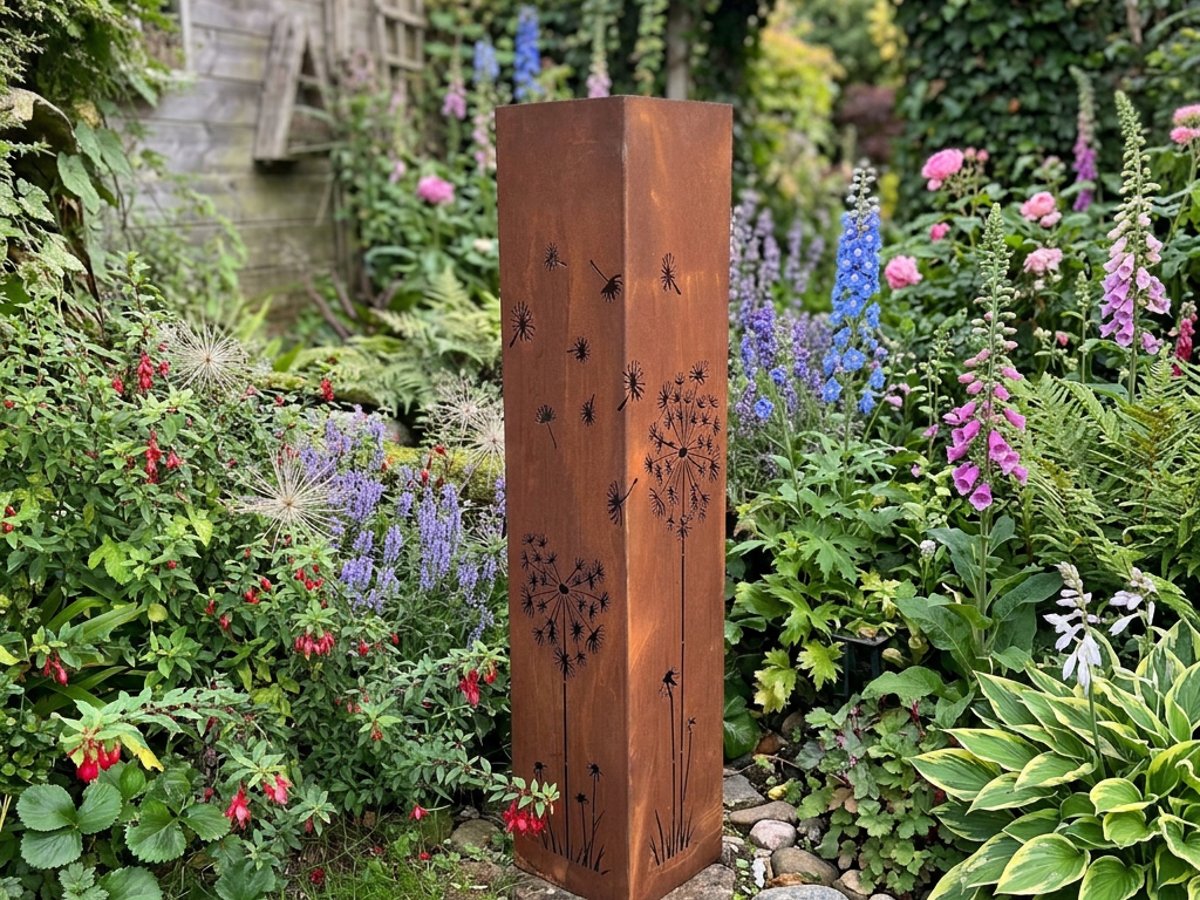
Shop the Dandelion Steel Decorative Garden Column →
Frequently asked questions
Do garden mirrors make a garden look bigger?
A single well-placed outdoor mirror can make a small garden appear up to twice its actual depth. The effect is strongest when the mirror reflects open greenery rather than hard surfaces. Hide the edges behind climbing plants or a trellis frame for the best illusion.
Can you leave garden mirrors outside in winter?
Acrylic outdoor mirrors can stay outside all year in the UK climate without damage. Glass mirrors need frost-protected coatings to survive sub-zero temperatures. Check and re-seal frame joints with outdoor silicone before October each year to prevent moisture creeping behind the reflective surface.
What size garden mirror do I need?
For a noticeable space-doubling effect, choose a mirror at least 80cm tall. Larger mirrors (120cm+) create the strongest depth illusion, especially in arched or window-pane frames. In very small courtyards, a group of three 60cm round mirrors adds visual variety without overwhelming the space.
Are garden mirrors dangerous?
Flat outdoor mirrors are safe and do not concentrate sunlight enough to cause fires. Only concave (curved inward) mirrors pose a fire risk. Use shatterproof acrylic rather than glass in areas accessible to children or pets. During spring breeding season, cover mirrors at bird height to prevent territorial males from attacking their own reflection.
How do you stop a garden mirror from going black?
Black spots appear when moisture penetrates behind the reflective coating, so the fix is prevention through edge sealing. Apply outdoor-rated silicone sealant around all edges and the rear of the mirror before installation. Re-seal annually. Once black spots appear, they cannot be repaired — the mirror surface must be replaced.
What garden ornaments look best reflected in a mirror?
Stone fountains, bird baths, and statues create the most dramatic doubled reflections. The three-dimensional shape of a water feature or statue reflects with genuine depth, unlike flat plants. Position the ornament 60-100cm in front of the mirror for the clearest doubled effect. Moving water adds sparkle to the reflection.
Related articles
- Small Garden Ornaments: Space-Saving Ideas That Make a Big Impact
- Cottage Garden Ornaments: Traditional Styles That Never Date
- Modern Garden Sculptures: 12 Striking Ideas for UK Outdoor Spaces
- How to Choose a Garden Water Feature: Types, Costs and Running Expenses
- Spring Garden Makeover: Ornaments, Features and Fresh Planting Ideas
Matt W
Garden & Outdoor Specialist
Matt has spent over 16 years working hands-on with garden products across the UK. He tests materials in Staffordshire clay soil and hard water conditions, and writes from direct experience fitting, maintaining, and repairing everything from stone statues to cast iron furniture. His advice is based on what actually survives a British winter, not what looks good in a catalogue.