
Fairy Garden Ornaments & Miniatures: Ideas for Magical Outdoor Spaces
Written by Matt Ward on 9th Mar 2026.
Fairy garden ornaments are decorative figures and miniatures used to create small magical scenes in UK gardens. Our Enigma fairy range includes 7 hand-finished figures priced from £149 to £469, standing between 40cm and 120cm tall. Each figure is made from frost-resistant resin with a bronze-effect finish. Fairy gardens can be built in containers from 40cm wide or planted directly into borders. The best companion plants for UK fairy gardens are creeping thyme, mind-your-own-business, and dwarf ferns.
Matt W | Garden Ornament Specialist
Key Takeaways
- ✓ Our Enigma fairy range includes 7 hand-finished figures from £149 to £469, standing 40cm to 120cm tall
- ✓ Fairy gardens work in containers as small as 40cm wide, ideal for patios, balconies, and small spaces
- ✓ Best UK plants for miniature fairy scenes: creeping thyme, mind-your-own-business, and baby tears
- ✓ Frost-resistant resin construction means the figures stay outdoors year-round without cracking
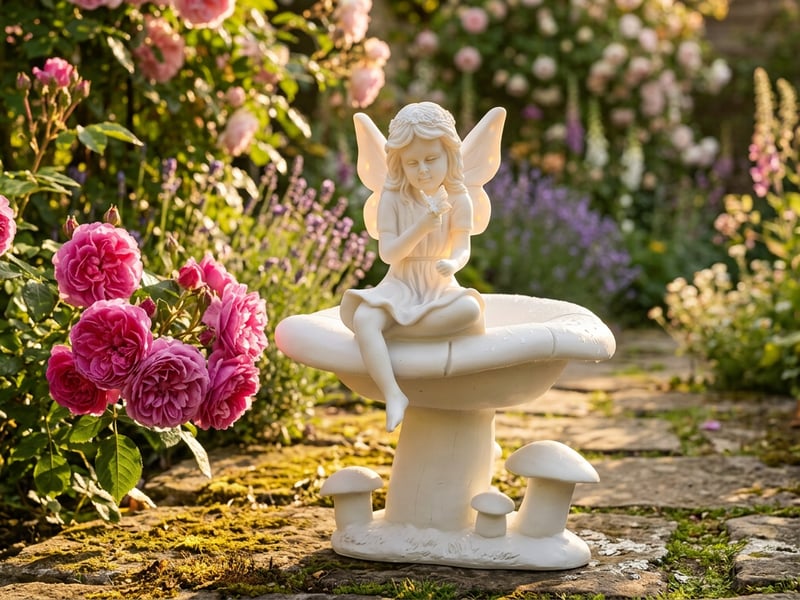
- ✓ The Fairy on Toadstool (50cm, £199) is the best all-rounder for size, detail, and price
Shop the Fairy on Toadstool Ornament →
Matt's Experience
I started stocking fairy ornaments five years ago, expecting them to be a niche line. They outsell our classical statues every spring. Customers buy them for children's garden areas, memorial corners, and as centrepieces for miniature planted scenes. The Enigma range surprised me with the level of hand-painted detail. Each wing vein, each petal on the toadstool caps, is picked out by hand. They look nothing like the cheap resin fairies you find at garden centres for £15.
What are fairy garden ornaments?
Fairy garden ornaments are figurative sculptures depicting fairies, pixies, and woodland creatures, designed to create miniature magical scenes outdoors. They range from small 15cm figurines for container gardens to full-sized 120cm statement pieces for borders and lawns. The tradition of fairy gardens in the UK grew from Victorian-era interest in folklore and the Arts and Crafts movement's love of handmade decorative objects.
Modern fairy ornaments come in three main materials. Cast resin with bronze or verdigris finishes is the most common because it combines fine detail with weather resistance. Cast stone suits gardeners who want pieces that age and develop lichen. Bronze is the premium option, lasting 100+ years but costing significantly more. Our Enigma fairy range uses frost-resistant resin with a hand-applied bronze patina. Each piece looks antique from day one. Browse our full collection of garden ornaments for the complete range.
Best fairy ornaments for UK gardens
The Enigma range offers seven fairy figures, each with a distinct pose and personality, priced between £149 and £469. Every figure is hand-finished, so no two are identical. The bronze-effect coating resists UV fading and does not crack in frost down to -15C. That covers every winter the UK has had in the past 30 years.
| Product | Height | Price | Best For |
|---|---|---|---|
| Fairy on Toadstool | 50cm | £199 | Border focal points, container centrepieces |
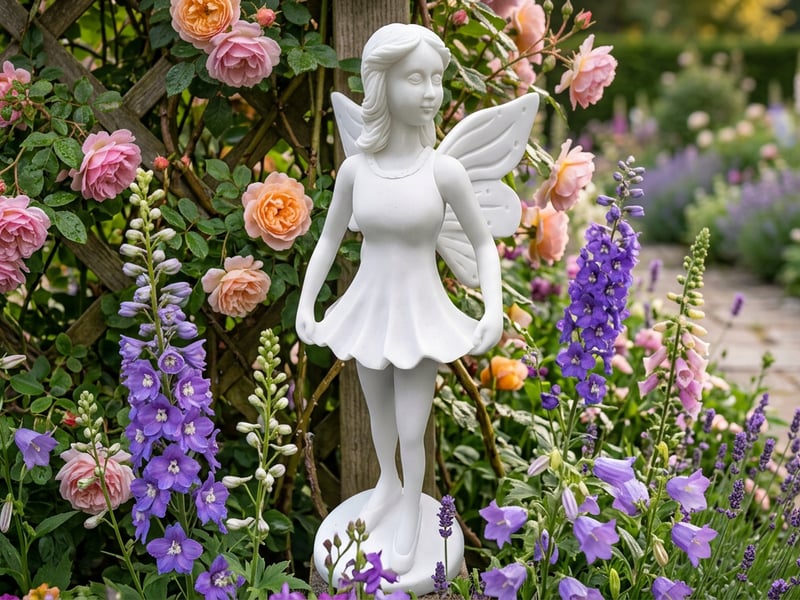
| Curtseying Fairy | 45cm | £165 | Cottage garden paths, entrance features |
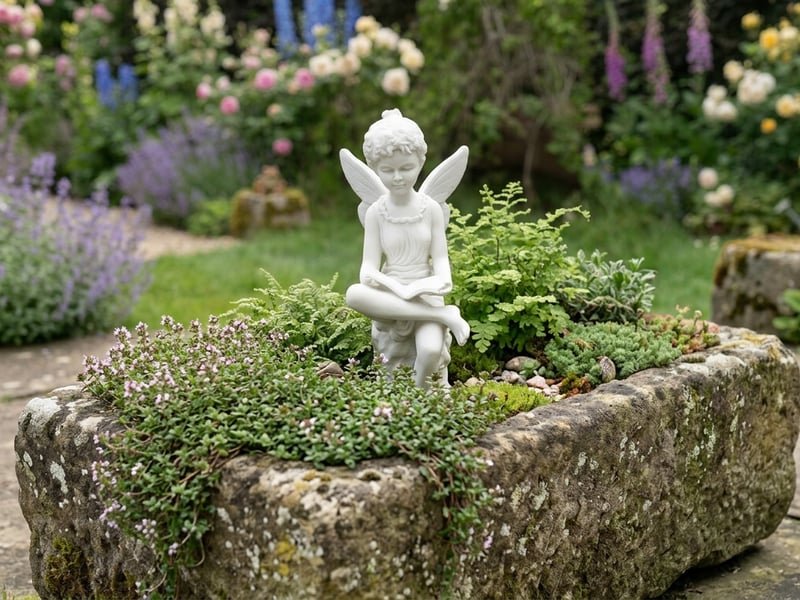
| Reading Fairy | 40cm | £165 | Quiet corners, reading nooks, memorial gardens |
| Fairy with Butterfly | 45cm | £165 | Wildlife gardens, near bee-friendly planting |
| Fairy of Peace | 40cm | £149 | Zen areas, meditation corners, calm spaces |
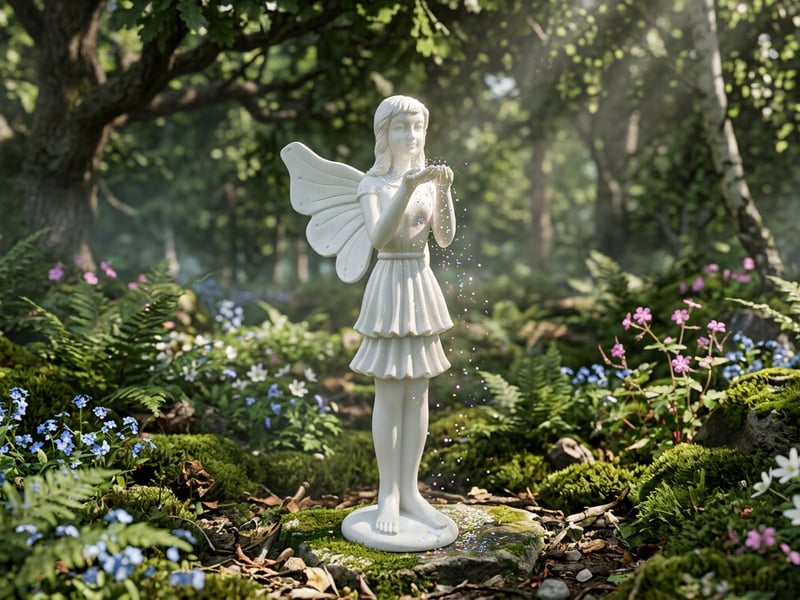
| Fairy Dust | 50cm | £199 | Statement borders, flanking garden gates |
| Fairy on a Swing | 120cm | £469 | Large gardens, lawn centrepieces, show gardens |
For smaller budgets, the Relaxed Pixie sculpture at £85 captures the same woodland feel at a lower price point. It pairs well with the fairy figures and adds variety to a miniature scene.
How to create a fairy garden
A fairy garden needs three things: a container or defined space, miniature plants, and at least one ornament as the focal point. You do not need a large garden. A frost-proof pot 40cm across and 20cm deep is enough for a single fairy figure surrounded by creeping plants. Larger displays work well in shallow stone troughs, half-barrels, or old butler sinks.
Start with drainage. Drill holes in the base if your container lacks them and add a 3cm layer of gravel. Fill with a mix of 70% multi-purpose compost and 30% horticultural grit. The grit improves drainage and stops miniature alpine plants sitting in wet soil over winter.
Place your fairy ornament first, pressing the base into the compost so it sits firmly. Then plant around it, starting with the tallest plant at the back and working forward with smaller ground-cover species. Leave small gaps for paths made from fine gravel, slate chips, or tiny stepping stones cut from flat pebbles. The placement guide covers positioning principles that apply to miniature scenes too.
Best plants for fairy gardens in the UK
The best fairy garden plants are slow-growing, small-leaved species that stay in proportion with miniature ornaments. Standard garden perennials look wrong because their leaves are too large. A hosta leaf next to a 40cm fairy figure looks like a tropical jungle, not a magical woodland. Choose plants that stay under 10cm tall and spread gently rather than vigorously.
UK-hardy plants that work well:
- Creeping thyme (Thymus serpyllum): stays under 5cm, flowers purple in June and July, releases scent when brushed
- Mind-your-own-business (Soleirolia soleirolii): forms a dense green carpet, thrives in shade, spreads to fill gaps
- Dwarf mondo grass (Ophiopogon japonicus 'Nanus'): dark green tufts that look like miniature ornamental grass
- Moss (Sagina subulata): Irish moss creates a soft, bright green surface resembling a tiny lawn
- Sempervivums: rosette shapes add structure, survive drought, and tolerate frost to -20C
- Miniature ferns (Asplenium trichomanes): maidenhair spleenwort grows in crevices and adds height variety
The RHS miniature gardens guide covers additional plant choices and maintenance advice for small-scale planting schemes.
How to weatherproof fairy ornaments outdoors
Frost-resistant resin fairy ornaments survive UK winters without any treatment, but taking a few steps extends their life to 15+ years. The main threats to outdoor fairy ornaments are UV fading, algae buildup, and physical damage from wind. Frost cracking is not a concern with the Enigma range because the resin formulation flexes slightly at low temperatures instead of splitting.
To prevent UV fading, avoid placing dark-finished pieces in full south-facing sun for 8+ hours daily. Dappled shade under a tree or a position that gets morning sun and afternoon shade preserves the bronze patina longest. Clean algae off twice a year with warm water and a soft brush. Never use bleach or pressure washers on resin as both damage the surface finish.
Wind is the biggest practical risk. Figures under 45cm tall and weighing less than 5kg can blow over in strong gusts. Secure lightweight pieces by drilling a 6mm hole through the base and bolting to a paving slab, or place them in sheltered spots behind planting. Our weatherproofing guide covers all materials in detail.
|
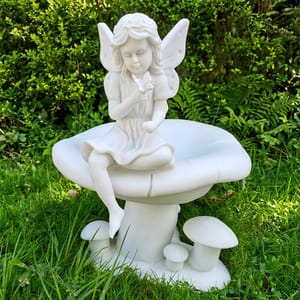
Matt's Pick for fairy gardensBest For: Border focal points, container centrepieces, cottage garden corners Why I Recommend It: At 50cm tall, it is big enough to anchor a planted scene without overwhelming the space. The toadstool base gives it a natural woodland feel. The hand-painted detail on the wings and cap is the best in the range. I keep one in my own garden near a birch tree and it still gets comments from visitors. Price: £199 |
Matt's Tip: Add water to bring a fairy garden to life. Even a small shallow dish sunk into the compost and filled with water creates a "pond" effect. For something more dramatic, the Fairyland Water Feature at £210 has a built-in pump and LED lights. It is self-contained, so you just plug it in and fill it. I recommend it for anyone building a larger fairy scene in a half-barrel or raised bed.
Common mistakes with fairy garden ornaments
The most frequent mistake is overcrowding the scene with too many ornaments and not enough plants. Fairy gardens look best when the planting does most of the work. One or two figures surrounded by living greenery creates the impression of a discovered world. Six figures crammed into a pot looks like a toy box.
Using standard potting compost without drainage material kills miniature alpine plants within one winter. Always mix in 30% horticultural grit. Fairy garden plants are mostly mountain or woodland species that cannot tolerate waterlogged roots. The grit also stops the compost compacting into a hard surface.
Placing ornaments in full exposed positions without shelter invites wind damage. Small resin figures are lightweight. A 45cm fairy weighing 3kg will topple in a 40mph gust unless it is sheltered by a wall, fence, or dense planting. Our securing guide covers anchoring methods for lightweight pieces.
Ignoring scale ruins the illusion. A 120cm fairy next to a 10cm mushroom ornament looks wrong. Match your figure sizes to each other and to the plants around them. The Small Mushroom Family at £50 works well alongside the 40-50cm fairy figures because the proportions feel balanced.
Further reading
Frequently asked questions
What are fairy garden ornaments made from?
Most fairy garden ornaments are made from frost-resistant resin with a hand-applied finish. The Enigma range uses a bronze-effect patina that mimics aged metal. Resin allows finer detail than cast stone, capturing wing veins, facial expressions, and fabric folds. It is also lighter, making figures easier to position and less likely to damage shelving or container edges.
How much do fairy garden ornaments cost?
Our fairy ornaments range from £149 to £469. The Fairy of Peace at £149 is the entry point. Mid-range figures like the Curtseying Fairy, Reading Fairy, and Fairy with Butterfly cost £165 each. The Fairy on a Swing at £469 is the largest at 120cm tall and makes a garden centrepiece. Related pieces like the Relaxed Pixie start at £85.
Can fairy ornaments stay outside in winter?
Yes, frost-resistant resin ornaments survive UK winters outdoors. The resin formulation flexes at low temperatures rather than cracking. Our Enigma range is tested to -15C. The main winter risk is wind knocking lightweight figures over. Secure pieces under 5kg with a bolt through the base or position them in sheltered spots behind walls or dense shrubs.
What size container do I need for a fairy garden?
A container at least 40cm wide and 20cm deep works for a single fairy figure. Shallow stone troughs, half-barrels, and old butler sinks all work well. Larger displays with multiple ornaments and varied planting need 60cm or more across. Ensure the container has drainage holes and add a 3cm gravel layer before filling with compost mixed with 30% horticultural grit.
What plants grow best in a fairy garden?
Slow-growing, small-leaved plants that stay under 10cm tall. Creeping thyme, mind-your-own-business, Irish moss, and sempervivums are all UK-hardy and stay in proportion with miniature ornaments. Avoid standard perennials whose leaves are too large for the scale. Dwarf mondo grass and maidenhair spleenwort fern add variety without outgrowing the scene.
How do I stop fairy ornaments blowing over?
Secure lightweight figures by bolting through the base into a paving slab or heavy pot base. Drill a 6mm hole through the ornament base and use a stainless steel bolt with a washer. Alternatively, use exterior-grade adhesive to fix the base to a stone slab. Placing figures in sheltered positions behind planting, walls, or fences also reduces wind exposure significantly.
Create your own fairy garden
Browse our Enigma fairy range, woodland pixies, mushroom families, and the Fairyland water feature. All figures are hand-finished, frost-resistant, and delivered free to mainland UK.
Matt W
Garden & Outdoor Specialist
Matt has spent over 16 years working hands-on with garden products across the UK. He tests materials in Staffordshire clay soil and hard water conditions, and writes from direct experience fitting, maintaining, and repairing everything from stone statues to cast iron furniture. His advice is based on what actually survives a British winter, not what looks good in a catalogue.