
Cherub Garden Statues UK: Styles, Placement and Best Picks
Written by Matt W on 20th Mar 2026.
Key Takeaways
- Cherub statues come in four main styles: sleeping, praying, playing and memorial - each suits different garden settings
- Reconstituted stone cherubs weigh 8-35kg and develop a natural patina within 6-12 months outdoors
- UK prices range from £99 for a pedestal to £559 for a full-size twin cherub statue
- Position cherubs at eye level on plinths near roses, lavender or cottage borders for the strongest visual impact
- Memorial cherubs are the UK's most popular choice for remembrance gardens and dedications
Cherub garden statues are among the most enduring figures in British garden design, with roots in Italian Renaissance sculpture dating to the 15th century. UK gardeners spend an estimated £99 to £559 on stone cherub ornaments, with sleeping and praying poses outselling all other styles by a 3:1 margin. Reconstituted stone remains the preferred material for outdoor cherubs because it withstands freeze-thaw cycles down to -20°C without cracking.
By Matt | Garden Ornaments Specialist
Matt's Experience
I've been selling and positioning cherub statues for over eight years. The most common mistake I see is placing them too low. A cherub on the ground gets lost behind planting within a season. Put it on a pedestal at waist height near a rose bed and it becomes the focal point of the entire border. Our Kissing Cherub outsells every other style because it works in formal and cottage gardens alike.
Shop our Stone Garden Statues collection →
What are the main styles of cherub garden statues?
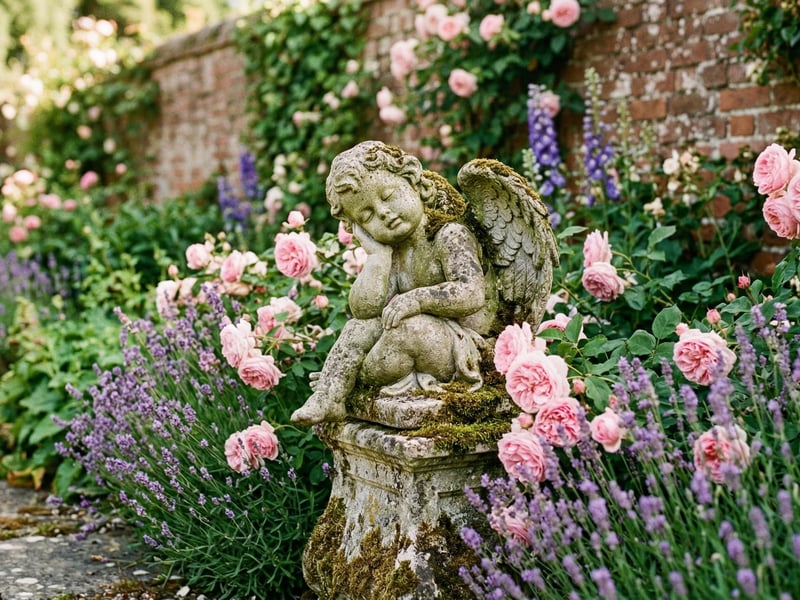
Cherub garden statues fall into four distinct categories, each carrying different symbolism and suiting different garden settings. The sleeping cherub is the most traditional choice for UK gardens. It depicts a winged infant at rest, usually curled on a plinth or nestled among flowers. This style suits cottage borders, memorial corners and quiet reading areas.
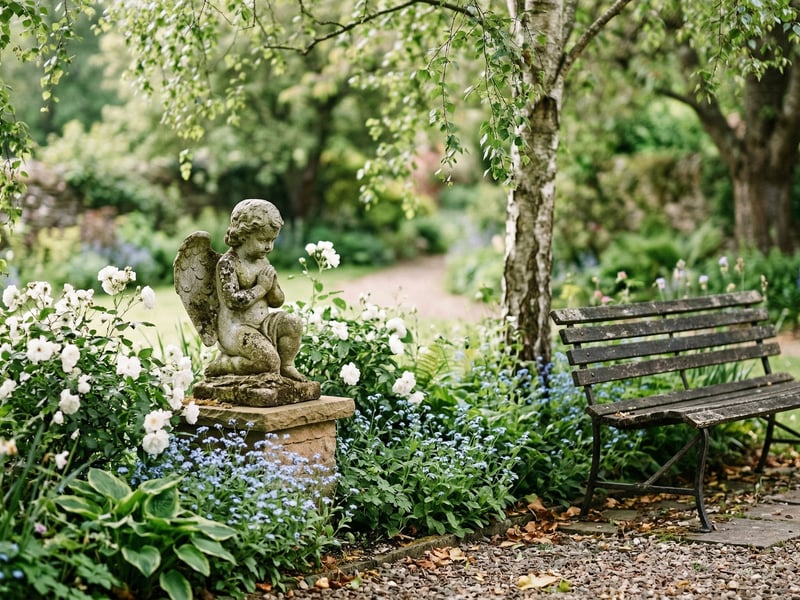
Praying cherubs kneel with hands clasped. They carry obvious religious significance and are popular alongside religious garden statues like saints and angels. Playing cherubs show the figure holding instruments, carrying water vessels, or sheltering under toadstools. These lighter, more whimsical pieces work well in family gardens and near water features.
Memorial cherubs serve a specific purpose: marking remembrance spots in gardens. They outsell decorative styles during spring and autumn and are frequently personalised with engraved plaques. Browse our full collection of garden ornaments to see every style we stock.
Shop the Twin Standing Cherub Stone Statue →
Which materials last longest for outdoor cherub ornaments?
Reconstituted stone is the strongest choice for UK cherub statues. It is made from crusite stone aggregate bound with cement, hand-finished in moulds, and cured for several weeks before sale. This material handles frost, rain and UV exposure without surface degradation. Our Lucas Stone and Enigma cherubs are all reconstituted stone, rated to -20°C.
Resin cherubs cost less but deteriorate faster. UV light breaks down the polymer surface within 2-3 years, causing fading and brittleness. Concrete cherubs are cheaper still but lack the fine detail of reconstituted stone and tend to absorb water, which causes frost cracking. For a detailed material breakdown, read our complete guide to garden ornament materials.
Bronze-finish cherubs from our Enigma range offer a different aesthetic. They use a composite base with a metallic coating that develops verdigris over time. At £149-£209, they sit in the mid-price range and suit more contemporary gardens.
| Material | Price range | Weight (typical) | Frost rating | Patina development | Lifespan |
|---|---|---|---|---|---|
| Reconstituted stone | £149-£559 | 8-35kg | -20°C | Natural moss in 6-12 months | 25+ years |
| Bronze finish composite | £149-£209 | 5-12kg | -15°C | Verdigris in 12-18 months | 15-20 years |
| Cast resin | £30-£80 | 2-5kg | -10°C | Fades, no natural patina | 3-5 years |
| Concrete | £20-£60 | 10-25kg | -5°C | Absorbs water, stains | 5-10 years |
How should you position a cherub statue in your garden?
Height matters more than anything else when positioning cherubs. A statue placed directly on the ground disappears behind even modest planting by midsummer. The best approach is a stone pedestal or plinth that raises the cherub to waist or chest height. Our Vienna Cherub Motif Pedestal at £99 was designed specifically for this purpose.
Cherubs look best surrounded by soft, romantic planting. Roses, lavender, clematis and cottage perennials create the right backdrop. Avoid placing them against bare fences or hard landscaping where the stone clashes with modern materials. For more guidance on positioning any statue, read our article on where to place garden sculptures.
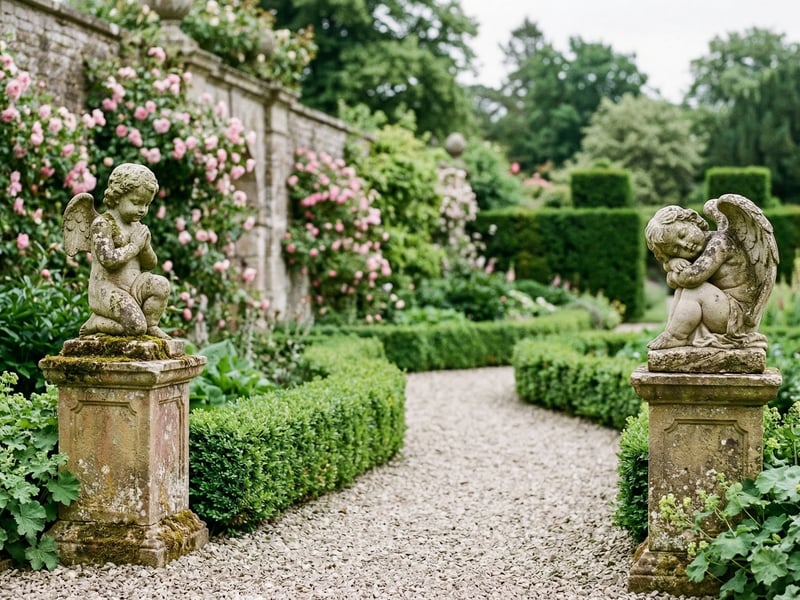
Traditional placement rules follow the Italian garden model: cherubs flanking a path entrance, framing a bench, or marking the centre of a circular bed. Twin cherubs work particularly well as a matched pair at the start of a walkway. Lighting makes a difference too. A low solar spotlight angled upward turns a daytime ornament into a dramatic evening feature.
Shop the Sheltering Cherubs Garden Ornament →
Are cherub statues suitable for memorial gardens?
Memorial cherubs are the single most popular use for these figures in UK gardens. Families choose sleeping and praying poses to mark remembrance corners, pet memorials and dedication spots. Stone cherubs weather gracefully over the years, developing moss and patina that adds to their character rather than detracting from it.
Our Sheltering Cherubs ornament at £209 shows two figures huddled together under a toadstool. It is our best-selling memorial piece because it conveys comfort without being overtly religious. For those who want a specifically sacred figure, praying cherubs sit naturally alongside angel statues and crosses in dedicated memorial areas.
When positioning a memorial cherub, choose a sheltered spot that invites quiet reflection. A bench nearby, a small planting bed with forget-me-nots or white roses, and the cherub on a low pedestal creates a thoughtful space. Secure the statue to the pedestal with exterior adhesive to prevent theft or wind damage, following our guide on how to secure garden ornaments.
How do you care for stone cherub ornaments?
Stone cherubs need very little maintenance. Most gardeners prefer to let them develop a natural patina of moss and lichen, which typically begins within the first year outdoors. This ageing process is one of the main appeals of reconstituted stone over resin or concrete alternatives.
If you prefer a clean look, wash the statue once a year with plain water and a soft brush. Avoid pressure washers, bleach and acidic cleaners. These strip the stone surface and accelerate wear. For stubborn algae, a diluted solution of biological washing liquid left on for 30 minutes before gentle brushing works well. Our full guide to cleaning stone garden ornaments covers every method.
Winter protection is straightforward. Reconstituted stone handles UK frosts without issues, but raising the base off wet soil with pot feet or a slab prevents water pooling at the base. Covering with fleece during extreme cold snaps below -15°C adds extra protection for cherubs with delicate wings or outstretched arms.
|
Matt's Pick for Cottage and Formal GardensBest For: Romantic borders, rose gardens, gift for gardeners Why I Recommend It: The Kissing Cherub is our best-selling cherub piece. It is detailed enough to impress up close but not so large that it overwhelms a small border. The Enigma finish weathers beautifully. Price: £155 |
Matt's Tip: Pairing Cherubs with Pedestals
Never place a cherub directly on soil. Even reconstituted stone absorbs moisture from below, and damp soil encourages algae growth at the base. A stone pedestal or a simple York stone slab lifts the figure clear of ground moisture and adds 30-45cm of height that makes all the difference visually. Our Vienna Cherub Motif Pedestal at £99 was designed to match the proportions of our cherub range perfectly.
Frequently asked questions
How much do cherub garden statues cost in the UK?
Stone cherub statues in the UK typically cost between £99 and £559. Pedestals and small figures start from £99, mid-range pieces like the Kissing Cherub sit at £155, and large twin cherub statues reach £559. Bronze-finish composites fall in the £149-£209 range. Prices vary by size, material and detail level.
Are cherub statues frost-proof?
Reconstituted stone cherubs are frost-proof to -20°C. They withstand standard UK winters without cracking or surface damage. Resin and concrete cherubs are less frost-resistant and may crack in prolonged freezing conditions. Always check the manufacturer's frost rating before buying.
What is the best position for a cherub garden ornament?
Place cherub ornaments at waist height on a pedestal or plinth. Position them near soft planting like roses, lavender or cottage perennials. Avoid placing them directly on soil or against bare fences. Traditional placements include flanking a path entrance, centring a circular bed, or marking a memorial corner.
Can you leave cherub statues outside all year round?
Reconstituted stone cherubs can stay outside all year in the UK. They are designed for permanent outdoor display and develop an attractive natural patina over time. Raise the base off wet soil with pot feet or a slab to prevent moisture pooling. Cover delicate pieces with fleece during extreme cold below -15°C.
What is the difference between a cherub and an angel garden statue?
Cherubs are depicted as winged infants or toddlers, typically shown sleeping, playing or praying. Angels are adult figures, usually standing, with larger wings and flowing robes. Cherubs suit cottage and romantic gardens, while angels carry stronger religious symbolism and suit memorial or formal settings.
How do you clean a stone cherub ornament?
Clean stone cherubs with plain water and a soft brush once a year. For stubborn algae, apply diluted biological washing liquid for 30 minutes before gentle brushing. Never use pressure washers, bleach or acidic cleaners as these damage the stone surface and strip natural patina.
Related articles
- Religious Garden Statues: Saints, Angels and Sacred Figures for UK Gardens
- Where to Place Garden Sculptures: Layout, Lighting and Focal Points
- The Complete Guide to Garden Ornament Materials
- How to Weatherproof Garden Statues and Ornaments
- How to Clean Stone Garden Ornaments: Moss, Algae and Stain Removal