
Buddha Garden Ornaments: Placement, Meaning and Feng Shui Guide
Written by Matt W on 5th Mar 2026.
Buddha garden ornaments in the UK range from £45 bronzed resin figures to £729 hand-finished stone statues. Each of the six main poses carries a different meaning. Meditating represents inner peace, laughing means abundance, and earth-touching signals wisdom. Teaching stands for knowledge, blessing for protection, and kneeling for gratitude. Feng shui rules require Buddha statues to sit above ground level on a plinth or pedestal. East-facing is the preferred direction.
Key takeaways
- ✓ Never place a Buddha directly on the ground — always use a plinth, rock, or pedestal
- ✓ Meditating Buddhas suit quiet garden corners; laughing Buddhas belong near entrances
- ✓ Cast stone and reconstituted stone weather best in UK conditions
- ✓ Face the statue east where possible, or toward your seating area
- ✓ Surround with low planting — bamboo, ferns, and hostas work well
Our experience with Buddha ornaments
We sell more Buddha ornaments than any other single category. The question I get asked most is "which pose should I get?" That is followed closely by "where do I put it?" Most first-time Buddha buyers sense that placement matters. They are just not sure why. This guide comes from handling over 50 different Buddha products. Customer feedback on what worked in their gardens shaped every section. The short version: pick a pose that means something to you. Raise it off the ground and give it breathing room.
What do the different Buddha poses mean?
Every Buddha statue uses a specific hand position called a mudra. Each mudra carries a different meaning. Knowing what they represent helps you pick the right one for your garden and your intention. Here are the six poses you will find most often in UK garden ornaments.
Meditating Buddha (Dhyana mudra)
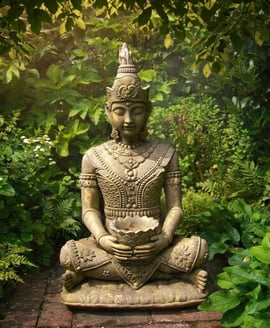
Hands resting in the lap, right over left, thumbs touching. This is the most popular pose for gardens. The meaning is inner calm and quiet focus. A meditating Buddha works best in a sheltered corner or beside a bench. Near a water feature is ideal too. Our Lotus Meditating Buddha (£379) and Seated Meditating Buddha (£355) are both cast stone. They weigh enough to stay put year-round.
Laughing Buddha (Budai)
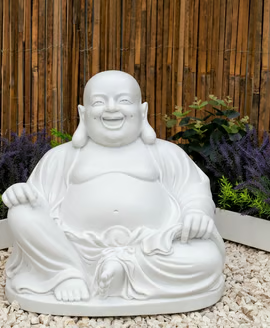
Big belly, wide grin, often carrying a sack. Strictly speaking, this is not Gautama Buddha but a Chinese folk monk called Budai. Budai is associated with abundance and good fortune. In feng shui, a laughing Buddha belongs near your front door or garden entrance. He should face inward, toward the garden rather than outward to the street. Our feng shui placement guide covers positioning in more detail.
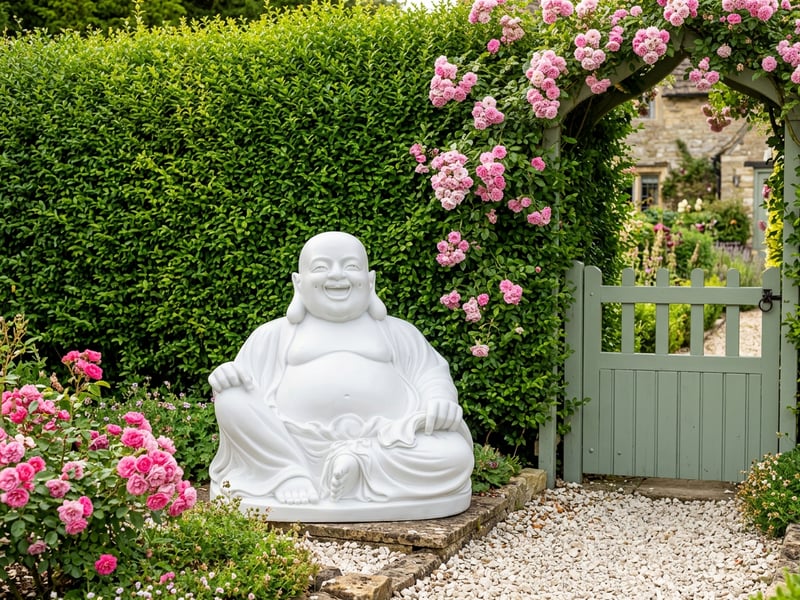
Shop the Large Laughing Buddha in White →
Earth-touching Buddha (Bhumisparsha mudra)
Right hand reaching down to touch the ground, left resting in the lap. This pose marks the moment of enlightenment, when Siddhartha refused to move until he found the truth. People pick this one for gardens they have put real effort into. Place it where you can see it from a window as a daily reminder. Our Earth Buddha in Stone (£49) and Sandstone (£49) are both hand-finished and frost-resistant.
Teaching Buddha (Vitarka mudra)
One hand raised with thumb and index finger forming a circle. The circle made by the fingers stands for the wheel of dharma, or the passing on of knowledge. It is a popular choice for gardens used for reading, study, or conversation. The Standing Teaching Buddha (£125) is one of our most affordable stone pieces. It works well on a plinth beside a garden seat.
Blessing Buddha (Abhaya mudra)
You will recognise this one by the right palm raised outward at shoulder height. It is a gesture of protection and reassurance. It says "do not fear." A blessing Buddha works near a garden entrance or along a path where it greets you. The open palm is visible even from 10-15 metres, so it suits exposed positions well.
Kneeling Buddha
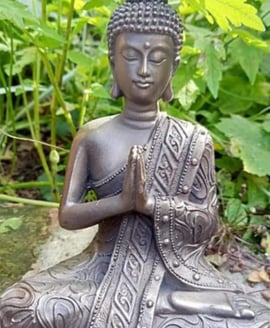
Hands together in prayer, kneeling position. The mood is gratitude and devotion. It is a smaller, more intimate pose that suits courtyard gardens, window boxes, or tucked in among planting. Our Kneeling Buddha (£299) is reconstituted stone at 299 and looks particularly good surrounded by ferns.
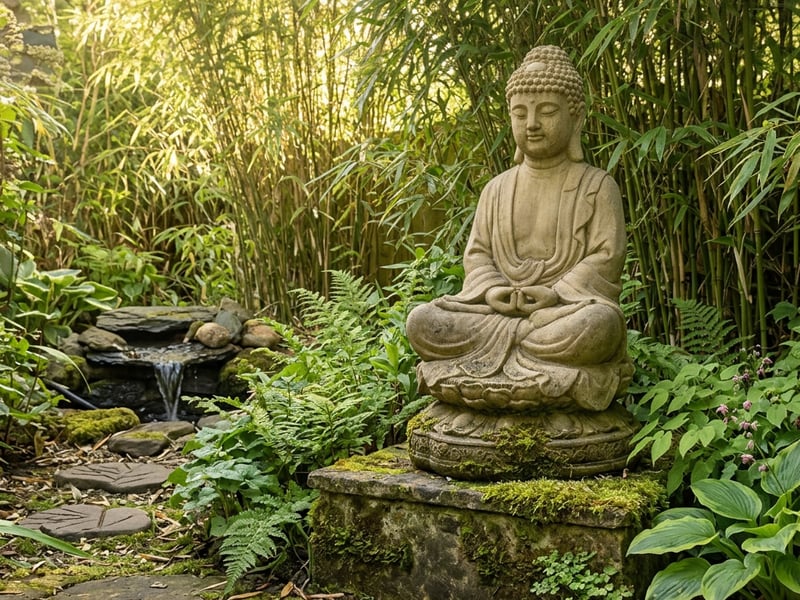
Shop the Lotus Meditating Buddha Statue →
Buddha pose comparison: meaning, placement, and price
| Pose | Meaning | Best placement | Our price from |
|---|---|---|---|
| Meditating | Inner peace, calm | Quiet corners, near water | £355 |
| Laughing (Budai) | Abundance, good fortune | Entrances, facing inward | £65 |
| Earth-touching | Wisdom, determination | Visible from windows | £49 |
| Teaching | Knowledge, guidance | Near seating areas | £125 |
| Blessing | Protection, reassurance | Paths, garden entrance | £199 |
| Kneeling | Gratitude, devotion | Courtyards, among planting | £299 |
Where to place a Buddha statue in your garden
Honestly, placement matters more than which pose you choose. I have seen a £45 resin Buddha look brilliant because someone thought about where it went. And I have seen a £500 stone piece look wrong because it was plonked on a patio slab with no thought.
The one rule you must follow
Never place a Buddha directly on the ground. In Buddhist tradition, this is considered disrespectful. Always raise it onto a plinth, pedestal, flat rock, or low wall. Eye level or above is ideal. Even 15-20cm of height makes a difference. A simple concrete plinth costs under £20 from any building merchant and transforms the whole look.
Feng shui positioning
Face the statue east if your garden layout allows it. East is the traditional direction for spiritual statues in feng shui. If east does not work, face it toward your main seating area or toward the house entrance. The idea is that the Buddha should "watch over" the space rather than face a wall or fence. Keep the area around the statue clean and uncluttered. Surround it with calm planting rather than loud colours.
Matt's tip: create a dedicated corner
The best Buddha gardens I have seen use a dedicated corner rather than dropping a statue into an existing border. Lay a 1m square of gravel or pebbles. Place the Buddha on a stone plinth at the back. Add a low bamboo or two ferns either side and put a solar lantern nearby. That takes an afternoon and about £80 on top of the statue. The result looks like you spent thousands on a garden designer.
Where not to place a Buddha
Avoid placing Buddha statues near bins, utility areas, or heavily trafficked paths where they might get knocked. Do not place them in the driveway or next to the garage. These locations show a lack of respect in Buddhist tradition. Also avoid placing a Buddha on the ground beside your back door where people step over it. If space is tight, a shelf or wall-mounted plaque works better. Our stone ornament positioning guide has more general advice.
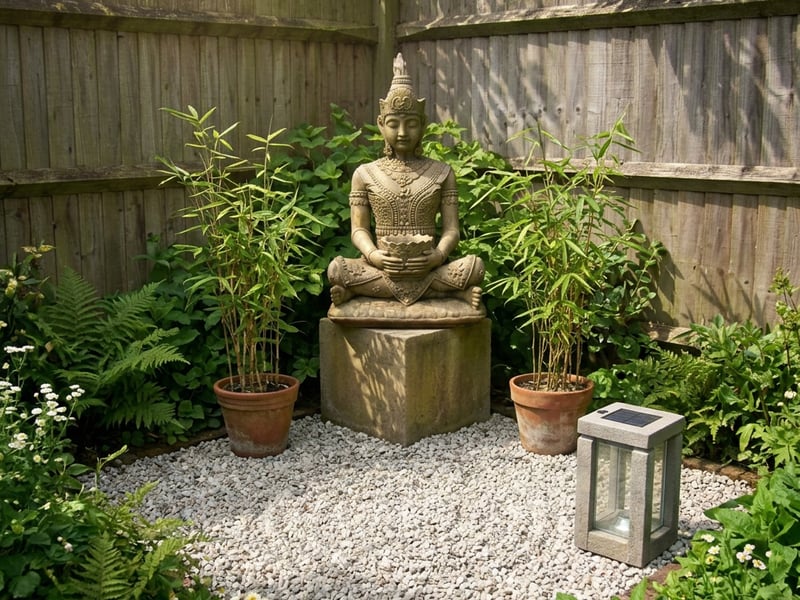
What material is best for outdoor Buddha statues?
UK weather is hard on garden ornaments. Rain, frost, and temperature swings test every material differently. After selling Buddha statues for over a decade, we know which materials hold up and which do not.
Cast stone and reconstituted stone are the most durable options. They handle frost without cracking and develop a natural patina that makes them look better with age. Our Lucas Stone range uses reconstituted stone with sharp detail that holds up for 20+ years. Prices start from £125 for the Standing Teaching Buddha.
Resin and polyresin are lighter and cheaper. A bronzed resin Buddha starts at £45. They resist rain well but direct sunlight can cause fading over 3-5 years unless UV-stabilised. Good for sheltered spots or under tree canopy. Our stone vs resin comparison covers the trade-offs in detail.
White painted stone gives a clean contemporary look. Our Melmar range in white suits modern gardens. The paint does need a wash once a year to keep algae off. A stiff brush and soapy water does it. Full cleaning instructions are in our stone ornament care guide.
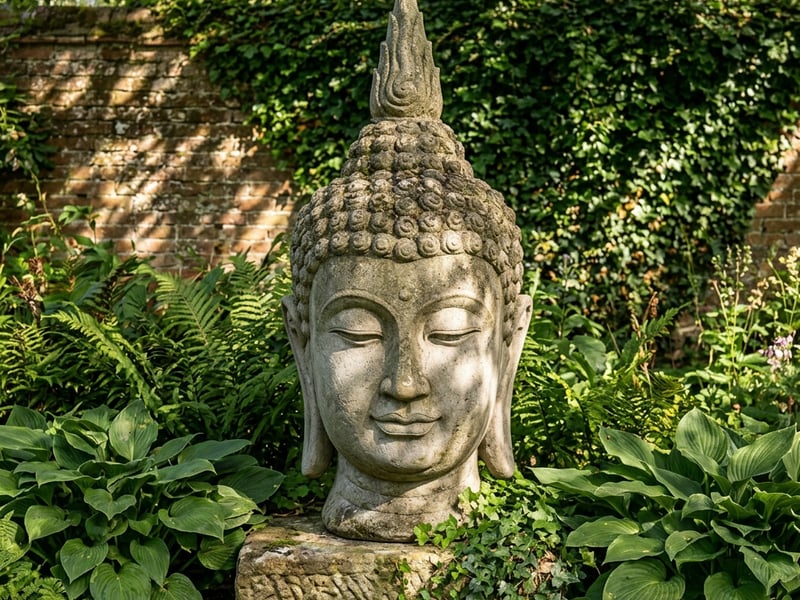
Shop the Large Thai Buddha Head Statue →
A note on cultural respect
For millions of people worldwide, Buddha statues are sacred religious figures. When you put one in your garden, a bit of thought goes a long way.
Raise it off the ground. Keep the area around it clean. Do not place it near rubbish or utility areas. Do not use it as a planter or rest drinks on it. None of that is difficult. Most Buddhist practitioners we have spoken to appreciate when people display Buddha figures with care, regardless of their own beliefs.
|
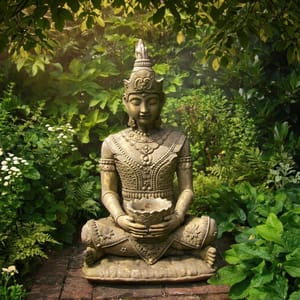
Matt's pick for a garden BuddhaBest for: A proper centrepiece that weathers beautifully Why I recommend it: The Serene Buddha is our original best seller. Reconstituted stone, hand-finished, heavy enough that you place it once and forget about it. After a year outdoors it develops a gentle grey-green patina that makes it look like it has been there forever. I have one in my own garden. Price: £429 View Product Browse our full collection of garden ornaments for more ideas. |
Popular Buddha garden ornaments
Frequently asked questions
Is it disrespectful to have a Buddha statue in the garden?
No, as long as you treat it with basic respect. Raise the statue off the ground on a plinth or pedestal. Keep the area around it clean and tidy. Do not place it near bins, utility areas, or on the floor where people step over it. Most Buddhist practitioners appreciate respectful display by non-Buddhists. The key is treating it as more than decoration.
Which direction should a Buddha face in the garden?
East is the traditional feng shui direction. If your garden layout does not allow east-facing, point it toward your main seating area or house entrance instead. The principle is that the Buddha should look out over the space rather than face a wall. Avoid facing it toward a road or a neighbour's fence.
Can Buddha statues stay outside in winter?
Cast stone and reconstituted stone handle UK frost well. We sell our stone Buddhas for year-round outdoor use without covers. Resin pieces also cope with rain and cold but can become brittle after several years of frost cycles. White painted stone may need a spring clean to remove winter algae. Bring lightweight resin ornaments under cover during severe frost if possible.
What is the difference between a laughing Buddha and a meditating Buddha?
They are different figures with different origins. The meditating Buddha represents Siddhartha Gautama, the historical founder of Buddhism. The laughing Buddha (Budai) is a Chinese folk monk associated with wealth and happiness. Meditating Buddhas suit quiet garden corners. Laughing Buddhas work near entrances where they face inward to welcome good fortune.
How heavy should a garden Buddha be to stay stable?
At least 20kg for unsecured outdoor placement. Our cast stone Buddhas range from 25kg to over 100kg. Anything under 15kg should be secured with adhesive to a plinth or placed in a sheltered position. Wind and foxes will knock over lightweight resin pieces left on open lawns. Heavier is always better for an unsecured garden position.
Browse our full range
We stock over 50 buddha garden ornaments from £45 bronzed resin figures to £729 hand-finished stone statues. Every piece is checked for detail quality and weather resistance. Not sure which pose or size suits your garden? Send us a photo and we will suggest something.
Related articles
- How to Age a Garden Statue
- Sustainable Garden Ornaments: Eco-Friendly Decorative Solutions
- Top 10 Stone Garden Ornament Ideas for UK Gardens
- Small Garden Design Ideas 2026
- The Ultimate Guide to Choosing Stone Garden Ornaments
Matt W
Garden & Outdoor Specialist
Matt has spent over 16 years working hands-on with garden products across the UK. He tests materials in Staffordshire clay soil and hard water conditions, and writes from direct experience fitting, maintaining, and repairing everything from stone statues to cast iron furniture. His advice is based on what actually survives a British winter, not what looks good in a catalogue.