
Why Every Garden Needs a Bird Bath: Wildlife, Pest Control and Care
Written by on 20th Jan 2025.
A bird bath attracts more species to your garden than a feeder alone. The RSPB recommends a minimum width of 300mm. Water depth should range from 25mm at the edges to 100mm at the centre. Birds that visit to drink and bathe also forage nearby, reducing garden pest numbers by up to 50%. A single blue tit brood needs 1,000 caterpillars delivered per day. Stone bird baths keep water 3-5°C cooler than resin in summer, slowing algae growth and lasting 30+ years.
Key Takeaways
- ✔ Bird baths attract species that feeders miss — blackbirds, thrushes, and wrens rarely eat seed but visit water daily
- ✔ Garden birds reduce insect pest populations by up to 50% during the growing season
- ✔ RSPB guidelines: 300mm+ wide, 25-100mm deep, with sloping sides and a textured surface
- ✔ Position 2-3m from escape cover and 3-4.5m from feeders to keep water clean
- ✔ Never add antifreeze, salt, or glycerine in winter — the RSPB and RSPCA confirm these are toxic to birds
Matt's Tip: Watch from the Kitchen Window
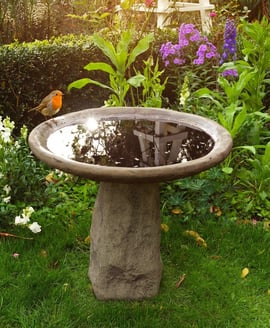
I tell every customer the same thing. Put the bird bath where you can see it from the room you use most. For most people that is the kitchen. You will be surprised how quickly you start recognising individual birds. Our robins are here every morning before 7am. The blackbird pair arrive at dusk. Within a week of placing a birdbath, you will know your garden's daily visitors by sight. It turns a patch of grass into something genuinely alive.
Why Birds Need Water as Much as Food
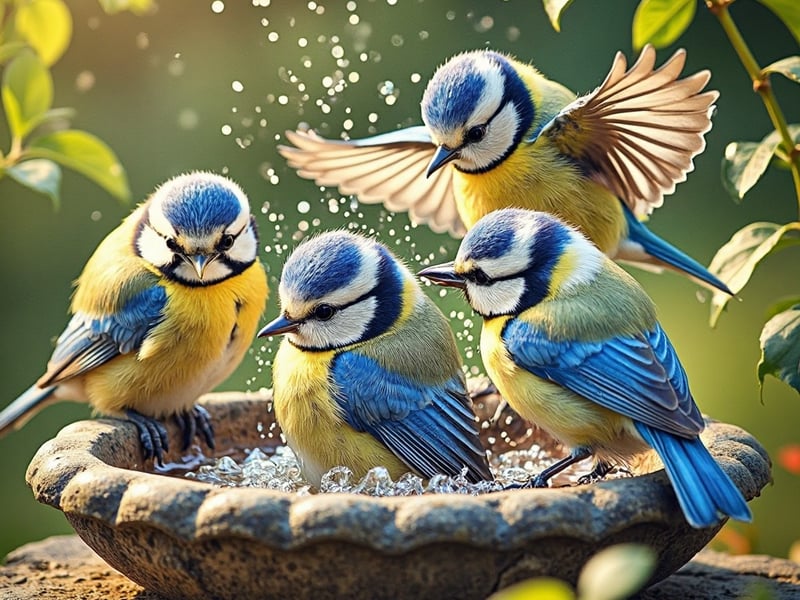
Shop the Blue Tit Birdbath in Stone →
Birds drink about 5% of their body weight daily and bathe to maintain feather condition. Clean feathers trap air between the barbs, which provides insulation. Without regular bathing, feathers mat together and lose their waterproofing. A bird with damaged feathers loses body heat faster and cannot fly as efficiently.
Bathing also helps control parasites. Birds splash to dislodge mites, lice, and feather parasites. After bathing, they preen to spread natural oils from the preen gland near the tail. This oil waterproofs the feathers and keeps them flexible. A bird that cannot bathe regularly is a bird in decline.
During winter, water becomes critical. Most natural sources freeze over. Puddles, streams, and ponds may be solid ice for weeks. A topped-up bird bath can be the only drinking water available within a bird's territory.
Free Pest Control on Wings
Birds that drink and bathe in your garden also forage there. A Biological Conservation study found garden birds reduce insect pest populations by up to 50% during the growing season. That is not a minor benefit — it is the difference between a slug-ravaged hosta and one that survives intact.
Here is what common UK garden birds eat:
| Bird | Pests Eaten | Daily Impact |
|---|---|---|
| Blue tit | Caterpillars, aphids, small beetles | One chick eats 100 caterpillars/day. A brood of 10 needs 1,000/day. |
| Song thrush | Slugs, snails | 10-15 slugs per day during breeding season |
| Robin | Beetles, caterpillars, leatherjackets | 5-8 slugs per day when feeding nestlings |
| Starling | Leatherjacket grubs (crane fly larvae) | Clears lawns of a major turf pest |
| House sparrow | Aphids, caterpillars, ants | Steady grazer across garden plants |
| Blackbird | Slugs, snails, earthworms | Clears fallen fruit and soil-level pests |
No chemicals. No cost. No harm to pollinators. The RHS lists thrushes, starlings, and robins as beneficial garden predators for exactly this reason. A bird bath keeps these species coming back all year. That extends the pest control season beyond what a feeder alone achieves.
More Species Than a Feeder Alone
Seed feeders attract finches, tits, and sparrows. But ground-feeding and insect-eating species rarely touch seed. Blackbirds, song thrushes, wrens, and dunnocks visit water daily even though they ignore feeders entirely. A bird bath pulls in species you would never otherwise see in your garden.
Migrating birds stop for water too. In spring and autumn, warblers, flycatchers, and occasionally redstarts pass through UK gardens. A clean bird bath becomes a pit stop on their route. The RSPB's 2025 Big Garden Birdwatch recorded 9.1 million birds across the UK, with the house sparrow topping the count for the 22nd consecutive year. Starling numbers, however, have dropped 82% since 1970. Every garden that provides water and habitat helps.
What the RSPB Recommends
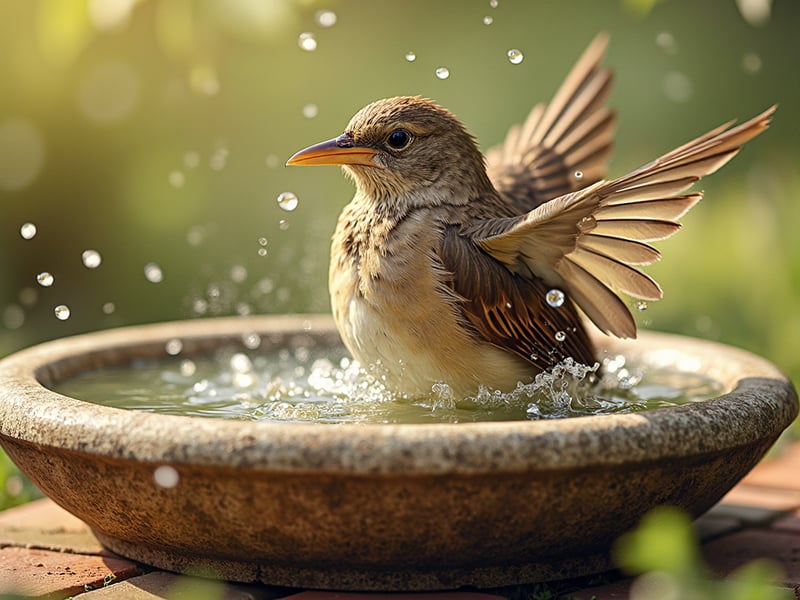
Browse our Stone Bird Baths collection →
The RSPB's guidelines for bird baths are specific:
| Feature | RSPB Recommendation | Why It Matters |
|---|---|---|
| Width | Minimum 300mm (ideally wider) | Multiple birds can bathe at once |
| Depth at edges | 25mm (2.5cm) | Small birds wade in safely |
| Maximum depth at centre | 100mm (10cm) | Deeper than this risks drowning small birds |
| Sides | Sloping, not vertical | Birds wade in gradually rather than jumping |
| Surface | Rough or textured | Birds need grip — smooth glazed surfaces cause slipping |
| Height (pedestal) | 600-900mm off ground | Reduces access for cats and ground predators |
If your bird bath is deeper than 50mm throughout, add a few flat stones or pebbles. These create shallow zones where smaller species like wrens and goldfinches can stand safely. For our full range of baths that meet these specifications, browse our stone bird bath collection.
Where to Put a Bird Bath
Placement determines whether birds use it daily or ignore it entirely. Think like a bird: they need clear sightlines to spot danger and a quick route to safety.
| Positioning Rule | Distance | Reason |
|---|---|---|
| From escape cover (tree/shrub) | 2-3 metres | Birds need a nearby perch to fly to if threatened |
| From dense undergrowth | 1.5m+ from base | Cats and foxes use thick shrubs as ambush cover |
| From bird feeders | 3-4.5 metres | Seed husks and droppings contaminate the water |
| From windows | 1m minimum, 3m+ ideal | Reduces window-strike risk for startled birds |
| Sun exposure | Partial shade | Full sun overheats water and accelerates algae |
Ground-level baths attract blackbirds, thrushes, and wood pigeons. Pedestal baths at 600-900mm suit finches, sparrows, and tits. If you have cats nearby, always choose a pedestal. Read our positioning guide for detailed sightline advice.
Why Stone Is the Best Material for a Bird Bath
Stone bird baths outperform every other material for UK garden use:
- Temperature control: Stone keeps water 3-5°C cooler than resin or plastic in direct sun. Cooler water slows algae growth and stays fresh longer.
- Natural grip: The rough surface of cast stone gives birds secure footing. Glazed ceramic and smooth resin cause slipping.
- Weight and stability: A stone pedestal birdbath weighs 15-40kg. It stays put in wind and cannot be knocked over by foxes or large birds.
- Longevity: Cast stone lasts 30+ years. Frost-proof to -20°C when properly made.
- Appearance: Stone weathers naturally, developing moss and lichen that make it look established within two seasons.
Resin is lighter and cheaper, but it heats up faster, algae grows quicker, and it fades in UV light. For a full material comparison, see our stone vs resin guide.
|
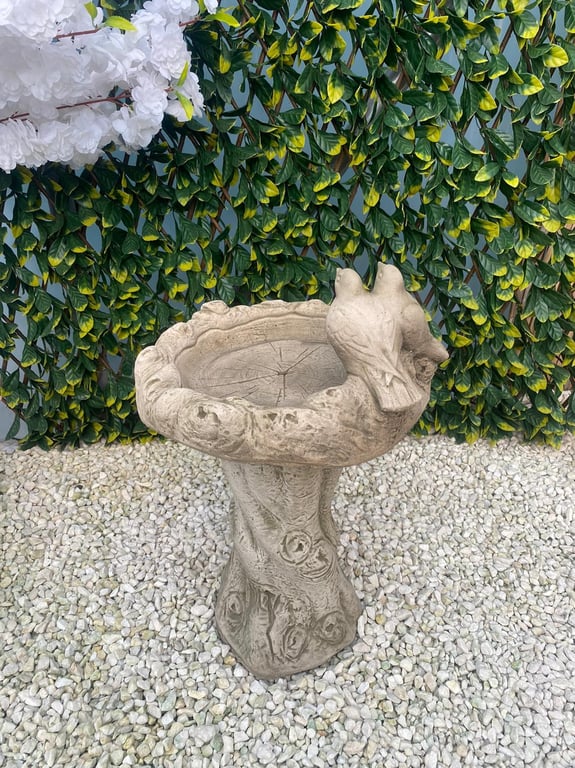
Matt's Pick: Best Value Stone Bird BathBest For: A first bird bath — classic pedestal design with carved dove detail Why I Recommend It: At £185 it is the most affordable stone bath in our range. The bowl depth and textured surface are spot on for UK garden birds. I have one in my own garden and it gets daily visits from robins, blue tits, and blackbirds. Price: £185 |
Seasonal Bird Bath Care
| Season | What to Do | How Often |
|---|---|---|
| Spring | Full sterilise with dilute bleach (1:9 ratio). Rinse thoroughly before refilling. Begin daily top-up routine. Migrating birds return in April. | Deep clean once. Top up daily. |
| Summer | Check water levels twice daily in hot spells. Change water every 1-2 days. Scrub weekly. Position in partial shade. Standing water breeds mosquito larvae within 3 days. | Top up daily. Full clean weekly. |
| Autumn | Deep clean before cold weather arrives. Remove fallen leaves daily. Monitor overnight temperatures. Start preparing for frost. | Clean weekly. Clear leaves daily. |
| Winter | Pour hot (not boiling) water each morning to melt ice. Float a tennis ball to delay surface freezing. Line stone baths with polythene for easy ice removal. | Check every morning without fail. |
For full year-round maintenance advice, read our stone ornament care guide.
What Never to Add in Winter
The RSPB and RSPCA are unequivocal on this:
- Antifreeze: Fatal to birds. Destroys feather waterproofing and causes hypothermia.
- Salt: Toxic if ingested. Damages feather structure.
- Glycerine: Mats feathers and destroys insulating properties.
- Boiling water: Thermal shock shatters ceramic and stone baths. Use hot tap water only.
The safest method is hot tap water poured in each morning. A floating tennis ball in the bowl delays overnight freezing by keeping the surface moving in wind. Browse our full collection of garden ornaments for more ideas.
Common Mistakes to Avoid
- Water too deep: Anything over 100mm risks drowning small birds. Add pebbles to create shallow zones.
- Full sun all day: Water overheats, evaporates fast, and algae blooms within days. Partial shade is best.
- Smooth surface: Glazed ceramic gives birds no grip. Always choose rough or textured bowls.
- Placed under a tree: Leaves and fruit drop contaminate the water constantly. Position near trees, not directly under them.
- Never cleaned: Stagnant water spreads avian diseases between visiting birds. Change water every 2-3 days minimum.
- On bare soil: Heavy stone baths sink and tilt. Place on a paving slab or compacted base.
Bird Bath Best Sellers
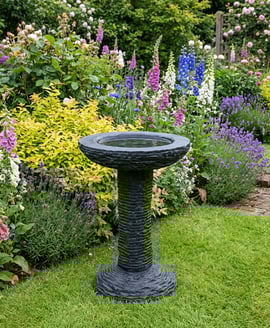
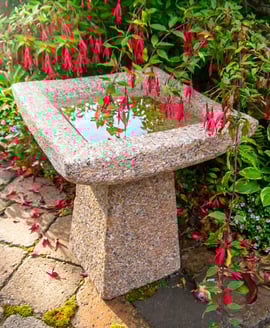
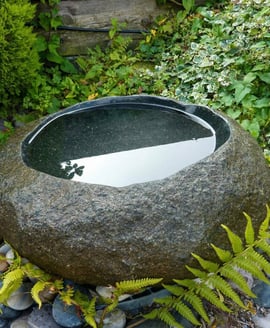
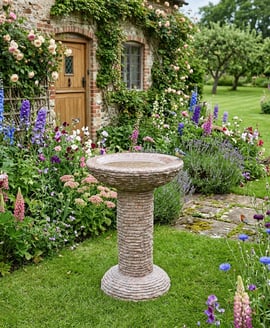
Frequently Asked Questions
The RSPB recommends 25mm at the edges sloping to a maximum of 100mm at the centre. Most common UK garden birds bathe comfortably at 50-75mm depth. Anything deeper than 100mm risks drowning small species like wrens and goldfinches. If your bath is uniformly deep, add flat stones or pebbles to create shallow wading areas. Sloping sides are essential so birds can walk in gradually.
Pour hot (not boiling) tap water into the bath every morning to melt overnight ice. Float a tennis ball on the surface — wind movement delays freezing. You can line stone baths with a polythene sheet so the ice disc lifts out cleanly without scraping the bowl. Never add antifreeze, salt, or glycerine. The RSPB and RSPCA confirm these destroy feather waterproofing and can be fatal.
Place your bird bath 3-4.5 metres (10-15 feet) from any feeder. Seed husks, droppings, and food debris fall from feeders and contaminate the water. Some sources recommend up to 9 metres for the cleanest water. Keep the bath near escape cover (a shrub or tree within 2-3 metres) but at least 1.5 metres from dense undergrowth where cats could hide.
Cast stone is the best all-round material for UK bird baths. It keeps water 3-5°C cooler than resin in summer. The rough surface gives birds grip and it lasts 30+ years. Stone's weight (15-40kg for pedestal baths) provides stability against wind and foxes. Resin is cheaper but heats up faster, grows algae quicker, and lacks the natural grip. Avoid glazed ceramic — the smooth surface is a slipping hazard.
Rinse daily and do a full scrub with dilute disinfectant once a week. In hot weather, change the water every 1-2 days. Standing water left for 3+ days without movement breeds mosquito larvae and harbours bacteria. The RSPB warns about salmonella risk from dirty bird baths — use outdoor-only cleaning tools and wash your hands afterwards.
Ground-level bird baths can attract rats, especially when placed near feeders. A pedestal bath at 600-900mm height is much less accessible to ground-level pests. Keep the area around the bath clear of spilled seed and fallen food. Empty the bath overnight if rats are a persistent problem in your area. The bath itself is not the main attractant — spilled bird food on the ground is.
Change the water every 2-3 days and position the bath in partial shade. Algae thrives in warm, still, sunlit water. Stone baths grow algae slower than resin because the water stays cooler. Adding a solar-powered fountain attachment keeps the water moving and further inhibits algae. Scrub the bowl weekly with a stiff brush and clean water — avoid chemical cleaners that could harm birds.
Further Reading
- 10 Best Stone Garden Ornaments for UK Gardens
- How to Choose Stone Garden Ornaments for UK Gardens
- Small Garden Design Ideas 2026
- Sustainable Garden Ornaments: Eco-Friendly Options
- How to Age a Garden Statue
Matt W
Garden & Outdoor Specialist
Matt has spent over 16 years working hands-on with garden products across the UK. He tests materials in Staffordshire clay soil and hard water conditions, and writes from direct experience fitting, maintaining, and repairing everything from stone statues to cast iron furniture. His advice is based on what actually survives a British winter, not what looks good in a catalogue.