
Starting a Lawn from Seed: The UK Guide
Written by Matt W on 29th Sep 2025.

Browse our Stone Garden Ornaments →
Starting a lawn from seed in the UK costs £2-5 per m² compared to £8-15 for turf, saving over £1,000 on an average garden. Sow between September and October for the best results, soil temperatures of 12-18°C and increasing autumn rainfall create ideal germination conditions. Use 35-50g of seed per m², rake into the top 5mm of soil, and water daily for the first 10 days. Expect visible growth within 7-21 days and a mowable lawn in 3-6 weeks.
Key takeaways
- ✓ Best sowing time: September-October for autumn, late March-May for spring. Soil must reach 10°C minimum.
- ✓ Seed rates: 35-50g per m² for new lawns, 20-25g per m² for overseeding bare patches.
- ✓ Germination: Ryegrass appears in 7-10 days, fescue takes 14-21 days. Quality seed hits 80-95% germination.
- ✓ Watering: Daily light watering for the first 10 days, then twice-weekly deeper soaks from week 4.
- ✓ First mow: Cut when grass reaches 4cm, typically 3-6 weeks after sowing. Remove only 1cm on the first pass.
Matt's tip: sow in september, not spring
I have sown lawns in every month from March to October and the difference between spring and autumn is night and day. Spring-sown lawns fight against rising temperatures, competing weeds, and dry spells. Autumn-sown lawns get warm soil, steady rain, and almost no weed competition. The grass establishes roots through winter and comes into spring already strong. If you can only sow once, make it September.
Why grow a lawn from seed instead of turf?
Seeding a lawn costs roughly 75% less than laying turf. For an average UK garden of 188m², seed costs £376-940 compared to £1,504-2,820 for turf plus labour. That is a saving of over £1,000 on materials alone.
Seed also gives you control over grass variety. Turf suppliers offer limited mixes, usually ryegrass-dominant blends suited to general use. Seed lets you choose shade-tolerant fescue for areas under trees, hard-wearing ryegrass for play areas, or fine ornamental grass for front gardens. You can even mix varieties to match different zones within the same garden.
The trade-off is time. Turf gives you a usable lawn in 2-3 weeks. Seed takes 8-12 weeks to reach full establishment. If you are willing to wait, seed produces a lawn that is better adapted to your specific soil and conditions.
When to sow grass seed in the UK
Soil temperature is the single most important factor. Grass seed needs a minimum of 10°C to germinate, and 12°C or above for reliable results. The UK has two sowing windows each year.
Autumn (September-October) is the best time. Soil temperatures sit at 12-18°C from summer warmth, average rainfall increases from 65mm in August to 85mm in September, and weed seeds are mostly dormant. Newly sown grass establishes roots through autumn and enters spring already strong.
Spring (late March-May) is the second option. Soil reaches 10°C in most UK regions by mid-April, but rising temperatures and drier conditions mean spring-sown lawns need more watering. Weed competition is also higher in spring.
| Month | Soil Temp (°C) | Sowing Rating | Notes |
|---|---|---|---|
| March | 8-10 | Marginal | Too cold in most regions. Wait for April. |
| April | 12-15 | Good | Reliable spring window in southern UK. |
| May | 15-18 | Good | Warmer soil, but watch for dry spells. |
| June-August | 18-22 | Avoid | Heat stress kills seedlings. Too risky. |
| September | 16-18 | Excellent | Best month. Warm soil + steady rain. |
| October | 12-14 | Good | Sow before mid-October for winter root growth. |
| Nov-Feb | 4-8 | Avoid | Too cold for germination. |
Choosing the right seed mix
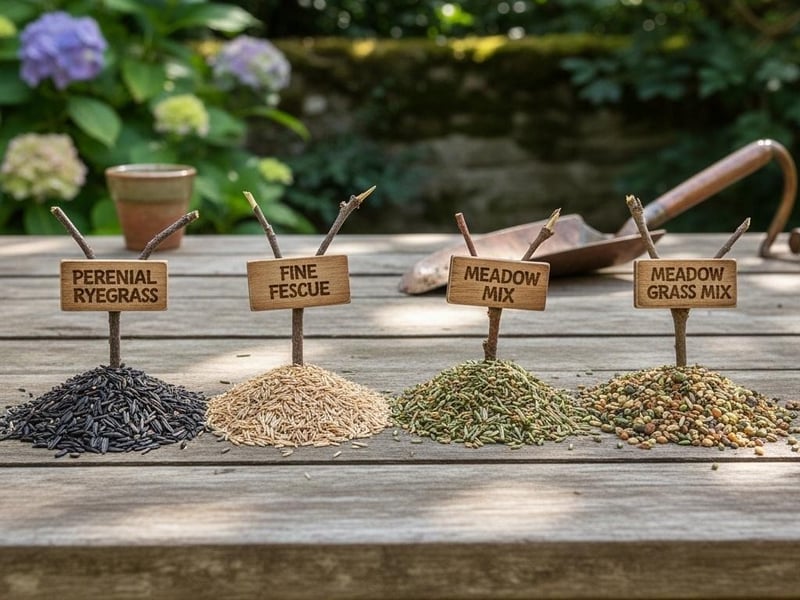
UK garden centres sell three main types of grass seed mix. Each suits different conditions and uses.
Perennial ryegrass dominates general-purpose mixes (60-80% of most blends). It germinates fast (7-10 days), handles heavy foot traffic, and produces a deep green lawn. The downside: it needs regular mowing and watering.
Fine fescue varieties (chewing fescue, red fescue, slender creeping fescue) tolerate drought, shade, and poor soil. They grow slowly, need less mowing, and produce fine-textured lawns. Use fescue-dominant mixes under trees, on slopes, or in areas with thin soil.
Smooth-stalked meadow grass repairs itself through underground runners. Slow to establish but makes a hard-wearing lawn after its second season. Good for play areas and family gardens.
| Garden Condition | Recommended Mix | Why |
|---|---|---|
| Heavy shade (under trees) | Fine fescue blend | Tolerates up to 50% shade |
| High traffic (children/pets) | Ryegrass dominant | Fast repair, wear-resistant |
| Drought-prone or sandy soil | Fescue/meadow grass | 40% less water needed |
| Front garden (ornamental) | Premium fine fescue | Dense, fine texture, bowling-green look |
| General purpose | Mixed blend | Balanced performance, good all-rounder |
Reading seed labels
Quality seed packets display germination rates. Look for 80-95% germination, anything below 80% means old or poorly stored seed. Check the sowing rate on the packet (usually grams per m²) and calculate your total area before buying. Purchase 10-15% extra to cover thin patches and bird losses.
Properly stored grass seed stays viable for 2-4 years. Badly stored seed loses 20-30% viability per year. Buy from a reputable supplier and check the packing date.
Add a stone bird bath to your new lawn →
Preparing the ground
Good soil preparation is the difference between a patchy mess and a thick, even lawn. Spend twice as long preparing as you do sowing, it pays off for years.
Clearing and testing
Remove all existing vegetation, weeds, and debris by hand. Do not use a rotavator on ground full of perennial weeds like couch grass or bindweed, it chops the roots into pieces and spreads them. Dig these out completely or spray with glyphosate 3-4 weeks before you plan to sow.
Test your soil pH with a £5 kit from any garden centre. Grass prefers 6.5-7.0. Below 6.0, add garden lime. Above 7.5, add sulphur. Allow 2-3 months for pH changes to take effect, so test early.
Check drainage by digging a 30cm hole after rain. If water is still sitting in it 24 hours later, you have a drainage problem. Add sharp sand and organic matter to improve heavy clay, or install a simple land drain for seriously waterlogged areas.
Soil improvement
Spread 2-3cm of well-rotted compost over the surface and fork it into the top 15cm. This improves both drainage in clay soils and water retention in sandy soils. It also provides slow-release nutrients during early growth.
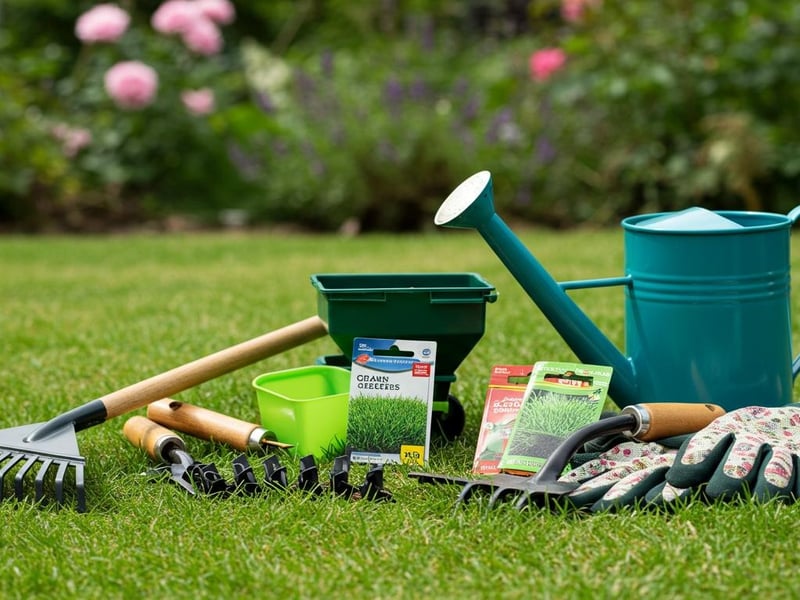
Level the area with a garden rake. Remove any stones larger than 2cm. Create a gentle slope away from the house to prevent water pooling against foundations. Walk across the surface systematically to firm it, your footprint should leave a slight impression, not a deep dent.
Pre-sowing fertiliser
Apply a balanced pre-seed fertiliser (10-10-10 NPK) at 35g per m² about 7-10 days before sowing. Water it in lightly if rain does not fall within 48 hours. This gives nutrients time to dissolve into the soil before delicate seedlings emerge.
Browse our Stone Garden Planters →
How to sow grass seed step by step
Calculate how much seed you need
Measure your lawn area (length x width for rectangles, break irregular shapes into sections). Multiply total m² by 35-50g for a new lawn, or 20-25g for overseeding. For the average UK garden of 188m², that is 6.6-9.4kg of seed.
Divide your total seed into two equal halves. You will sow in two passes at right angles for even coverage.
Sowing technique
Pick a calm, still day, wind scatters seed unevenly. Early morning is ideal (less wind, higher humidity).
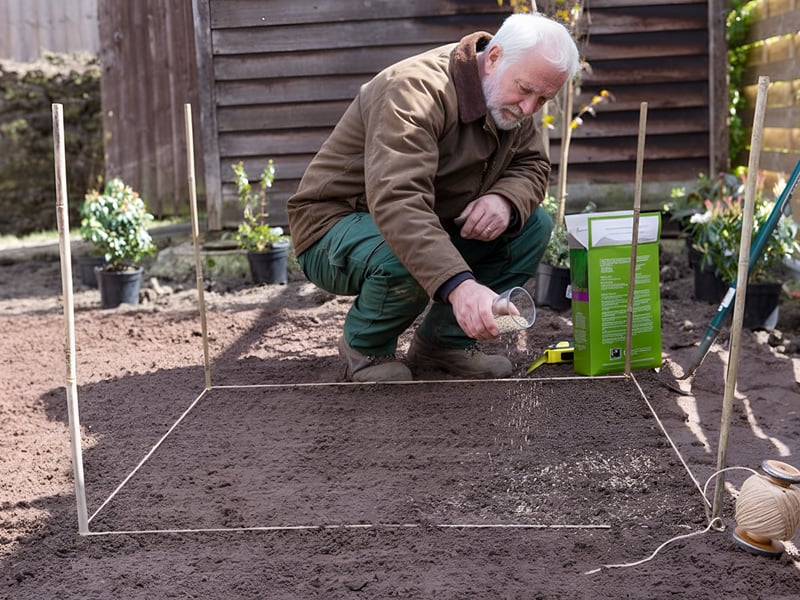
- Sow the first half walking in parallel strips along the longest dimension. Keep a steady pace and consistent arm swing. Overlap each strip by about 10cm.
- Sow the second half walking at 90 degrees to the first pass. This cross-pattern fills any gaps from the first application.
- Lightly rake the entire area with a spring-tine rake to push seeds into the top 5mm of soil. Do not bury them deeper than 1cm, seeds buried deeper than that achieve only 20% emergence.
- Firm the surface gently with the back of the rake or by walking on boards. This presses seed against soil for better moisture contact.
- Water immediately using a fine spray setting. Moisten the top 2cm of soil without creating puddles or washing seed into clumps.
Protecting from birds
Unprotected seed beds lose 30-50% of seed to birds within 48 hours. Pigeons, robins, and sparrows are the main culprits. Cover the area with fine mesh netting or horticultural fleece immediately after sowing. Secure the edges with pegs or stones so birds cannot get underneath. Remove the netting once grass reaches 2-3cm height.
A stone birdbath placed nearby gives birds an alternative focus. It will not stop them entirely, but a water source reduces the time they spend foraging on your seed bed.
Add a stone sundial as a lawn centre piece →
Aftercare: the first 8 weeks
The establishment period is when most lawns succeed or fail. Get the watering right and everything else follows.
Watering schedule
Water daily for the first 10 days using a fine spray. Apply 5-10mm each session, enough to moisten the top 2cm without waterlogging. Early morning is best, less evaporation, and the surface dries before nightfall (reducing fungal risk).
From week 2-4, water every other day but for longer. This encourages roots to grow downward seeking moisture rather than staying near the surface.
From week 4 onwards, switch to twice-weekly deep soaks of 25-30mm. By now the root system should be 3-5cm deep and able to access stored soil moisture between waterings. Adjust for rainfall, if it rains 10mm or more, skip that day's watering.
Germination timeline
| Week | What to Expect | Action |
|---|---|---|
| Week 1 | Nothing visible. Seeds absorbing moisture below surface. | Water daily. Do not walk on the area. |
| Week 2 | First green shoots from ryegrass. Fescue may take longer. | Continue daily watering. Keep netting in place. |
| Week 3-4 | Patchy green coverage. Some areas filling faster than others. | Reduce to every-other-day watering. This is normal. |
| Week 4-6 | Grass reaching 3-4cm. Coverage becoming more even. | First mow when it hits 4cm. Remove netting. |
| Week 6-8 | Dense growth. Grass thickening through tillering. | Twice-weekly deep watering. Light foot traffic OK. |
| Week 8-12 | Full establishment. Lawn usable for normal activity. | Feed with balanced lawn fertiliser. Regular mowing. |
First mow
Mow when the grass reaches 4cm. Set your mower to remove only the top 1cm, no more. Use sharp blades; dull blades tear young grass and create entry points for disease. Mow when the ground is dry. Collect clippings on the first 3-4 mows to prevent matting over young grass.
Protecting the establishing lawn
Keep all foot traffic off the lawn for the first 4 weeks. After that, light use is fine but avoid heavy traffic until week 8-12. Placing a few stone garden ornaments at the edges gives the space visual interest while the lawn fills in, and signals to visitors that the area is off-limits.
Seasonal lawn care calendar
Spring (march-may)
Apply a high-nitrogen spring fertiliser (20-5-5 NPK) once soil reaches 10°C. Begin mowing at 3-4cm height when growth resumes. Overseed any bare patches from winter damage using 20-25g per m². This is also the time to deal with moss, scarify, feed, and reseed bare spots in one go.
Summer (june-august)
Raise the mowing height by 1cm during hot spells. Longer grass shades its own roots and loses less moisture. Water deeply twice a week during drought rather than little and often. Watch for red thread disease (pink patches), it usually indicates low nitrogen. A feed sorts it out.
Autumn (september-november)
This is your premium sowing window for new lawns and overseeding. Switch to an autumn feed with higher potassium (5-5-20 NPK) to toughen grass for winter. Continue mowing until growth stops, usually mid-November. Final cut height: 2-3cm.
Winter (december-february)
Stay off frozen or waterlogged grass, walking on it damages the crowns permanently. Clear fallen leaves before they mat down and suffocate the grass beneath. Use this time to service your mower, sharpen blades, and plan any spring work.
| Season | Key Tasks | Timing | Result |
|---|---|---|---|
| Spring | Feed, overseed, first mows | March-May | Strong growth resumes |
| Summer | Deep watering, raise cut height | June-August | Root development, drought tolerance |
| Autumn | Sow new lawns, autumn feed | September-October | Best establishment results |
| Winter | Stay off, clear leaves, plan | November-February | Lawn enters spring healthy |
Troubleshooting common problems
Patchy germination
Usually caused by uneven sowing, seeds buried too deep, or dry spots the sprinkler misses. Overseed bare patches at 35-50g per m², rake in lightly, and keep moist. If large areas failed, check soil compaction, a garden fork pushed in 10cm should go in easily. If it does not, the soil is too hard for roots to penetrate.
Birds eating the seed
Unprotected areas lose up to 50% of seed in 72 hours. If netting is not practical, try laying light fleece directly on the soil surface. Some gardeners scatter a thin layer of compost over the seed to hide it. Increasing the sowing rate by 15% compensates for some bird loss.
Weeds growing faster than grass
Annual weeds germinate alongside grass seed in freshly cultivated soil. Do not panic and do not spray. Mow them along with the grass, most annual weeds cannot survive regular mowing. After 2-3 mows, the grass thickens and outcompetes them. Hand-pull perennial weeds like dandelion and plantain once grass is 4cm tall.
Seedlings turning yellow
Yellow grass in the first 6 weeks usually means waterlogging (roots sitting in saturated soil) or nitrogen deficiency. Check drainage first. If the soil drains well, apply a light liquid feed at half the recommended rate. Do not over-feed young grass, it burns easily.
Moss appearing in new lawns
Moss moves in when drainage is poor, the lawn is shaded, or soil is compacted. Improve drainage before reseeding. In shaded areas, switch to a shade-tolerant fescue mix. Our small garden design guide covers layout strategies that maximise light for lawn areas.

|
Matt's pick for new lawnsBest For: Adding a centre piece while your lawn establishes Why I Recommend It: A new lawn takes 8-12 weeks to fill in, and during that time the garden looks bare. A stone birdbath in the centre or at the end of the lawn gives the eye something to rest on while the grass grows. It also attracts birds, which is a bonus once the netting comes off. The Georgian Birdbath is low, sturdy, and heavy enough that it will not shift when you mow around it. Price: £175 View Product Browse our full collection of garden ornaments for more ideas. |
Frequently asked questions
Can you just scatter grass seed on a lawn?
Scattering seed without raking it in produces poor results. Seeds need direct contact with soil to absorb moisture and germinate. Surface-sown seed dries out faster, blows away in wind, and is fully exposed to bird predation. Light raking into the top 5mm of soil doubles germination rates. For overseeding an existing lawn, scarify first to expose soil, then scatter and rake.
What month should I plant grass seed in the UK?
September is the best month for sowing grass seed in the UK. Soil temperatures sit at 16-18°C from summer warmth, rainfall increases naturally, and weed competition is minimal. April and May are the next best options when soil reaches 10°C. Avoid June-August (heat stress kills seedlings) and November-February (too cold for germination).
How do you prepare the ground for grass seed?
Clear vegetation, test pH, improve drainage, and firm the surface. Remove weeds by hand or spray perennial weeds 3-4 weeks before sowing. Test soil pH (target 6.5-7.0). Fork in 2-3cm of compost. Rake smooth, remove stones over 2cm, and firm by walking over it. Apply pre-seed fertiliser 7-10 days before sowing. The surface should leave a slight footprint but not a deep dent.
How long does grass seed take to grow in the UK?
Ryegrass germinates in 7-10 days, fescue takes 14-21 days. The speed depends on soil temperature, moisture, and grass variety. First mowing is typically possible 3-6 weeks after sowing when grass reaches 4cm. Full establishment with traffic tolerance develops over 8-12 weeks during active growing seasons. Autumn-sown lawns establish faster than spring-sown ones.
What is the best grass seed for UK gardens?
Perennial ryegrass is the best all-round choice for most UK gardens. It germinates quickly, handles foot traffic, and stays green year-round. For shaded gardens, choose a fine fescue blend. For drought-prone areas, fescue and meadow grass mixes need 40% less water. Mixed blends combining ryegrass and fescue suit gardens with varied conditions. Always buy seed tested for UK climate.
How much grass seed do I need per square metre?
Use 35-50g per m² for a new lawn, or 20-25g for overseeding. Fine-textured varieties like fescue need the higher end of the range. Coarser ryegrass sits at the lower end. For the average UK garden of 188m², buy 6.5-9.5kg of seed. Add 10-15% extra to cover bird losses and thin patches that need a second pass.
Will grass seed germinate on top of soil without raking?
It can, but germination rates are roughly half those of raked-in seed. Surface seed faces higher risks from drying out, bird predation, and poor root anchorage. Even a light rake pass pushes seeds into contact with moist soil, which is all they need. Cover seeds with approximately their own depth of soil, 3-5mm is enough. Any deeper and emergence rates drop sharply.
Related articles
Matt W
Garden & Outdoor Specialist
Matt has spent over 16 years working hands-on with garden products across the UK. He tests materials in Staffordshire clay soil and hard water conditions, and writes from direct experience fitting, maintaining, and repairing everything from stone statues to cast iron furniture. His advice is based on what actually survives a British winter, not what looks good in a catalogue.