
How to Secure Garden Ornaments: Anti-Theft & Wind Protection
Written by Matt W on 4th Mar 2026.
Key takeaways
- ✓ 1 in 7 UK households have had items stolen from their garden, with ornaments a common target
- ✓ Ornaments under 15kg need anchoring against wind; under 25kg are easy theft targets
- ✓ Expanding masonry bolts are the strongest fixing for paved surfaces (holds 200kg+ pull force)
- ✓ Exterior stone adhesive works on stone and concrete but fails on resin and metal
- ✓ Steel cable and ground anchor systems cost £15-£30 and deter opportunist theft
- ✓ Smart motion sensors send phone alerts when an ornament is moved or lifted
- ✓ August is the peak month for UK garden theft so check fixings before summer holidays
Around 1.6 million UK households experienced garden theft in the past two years, according to Which? research. Garden ornaments and statues are among the most commonly taken items. This guide covers six methods to secure ornaments against theft and wind, with costs from £5 to £50 per piece.
Installer's note
I have fitted hundreds of stone ornaments across UK gardens. The ones that survive storms and stay put are always the ones where the owner spent ten minutes fixing them down properly. I have seen a 40kg birdbath topple in 50mph winds because it was just sitting on grass. A £5 bag of mortar mix would have saved a £200 replacement.
Why garden ornaments need securing
Garden ornaments face two threats: theft and wind. The problem is bigger than most people realise.
Office for National Statistics data for England and Wales shows 517,000 to 622,000 thefts from outside dwellings per year, a 20% increase year on year to March 2024. Which? found that 1 in 7 UK households had items stolen from their garden. Garden gnomes alone account for nearly 10% of garden thefts. Larger stone statues and bronze pieces get stolen to order, sometimes using vehicles and lifting equipment.
Wind is the quieter problem. A standard 60mph winter gust generates enough force to topple any unsecured ornament under 20kg. Exposed hilltop and coastal gardens face even worse. A falling statue can crack paving, damage other ornaments, or injure pets and children.
Every securing method in this guide costs under £50 and takes less than an hour.
Securing methods compared
Six methods cover the full range of ornaments. The right choice depends on your ornament's material, weight, and what surface it sits on.
| Method | Best for | Holds against | Cost | Reversible? | Difficulty |
|---|---|---|---|---|---|
| Expanding masonry bolts | Stone/concrete on paving | 200kg+ pull force | £5-£10 | No | Medium |
| Exterior stone adhesive | Stone-to-stone or stone-to-paving | Strong shear force | £10-£20 | No | Easy |
| Steel cable + ground anchor | High-value pieces on any surface | Opportunist theft | £15-£30 | Yes | Easy |
| Mortar bed | Heavy stone on hard surfaces | Wind, tipping, casual theft | £5-£8 | No | Easy |
| Screw-in ground anchors | Ornaments on soil or lawn | Wind and casual theft | £10-£20 | Yes | Easy |
| Sand/gravel ballast fill | Hollow resin or plastic pieces | Wind only | £3-£5 | Yes | Easy |
How to bolt an ornament to paving
Expanding masonry bolts are the strongest permanent fix. They work on concrete, natural stone paving, and brick. This is what I use for any ornament worth over £200.
What you need
- SDS drill with masonry bit (10mm or 12mm, matching bolt size)
- Expanding masonry bolts (M10 or M12, stainless steel for outdoor use)
- Metal L-brackets or flat brackets (stainless steel)
- Spirit level
- Exterior silicone sealant (to waterproof the drill holes)
Step by step
- Position the ornament exactly where you want it. Mark the bracket positions with a pencil.
- Move the ornament aside. Drill into the paving at each mark to the bolt depth (usually 50-70mm).
- Clear the dust from each hole with a puff of air or a brush.
- Insert the expanding bolts and tighten the brackets down. Do not overtighten on natural stone as it can crack.
- Place the ornament against the brackets. Some brackets wrap over the base; others use a bolt through the ornament's base hole.
- Apply a bead of exterior silicone around each hole to stop water getting in and freezing.
The whole job takes 20 to 30 minutes. On sandstone paving, use a lower drill speed to avoid chipping. On granite, expect to go through drill bits faster.
How to use exterior stone adhesive
Stone adhesive bonds an ornament directly to paving without drilling. It works on cast stone, reconstituted stone, concrete, and natural stone. It does not work well on resin, plastic, or painted metal because the bond relies on the porous surface absorbing the adhesive.
Products like Sika AnchorFix, Akemi stone adhesive, or exterior-grade polyurethane construction adhesive all work. Avoid standard silicone sealant as it has no structural strength.
Application
- Clean both surfaces thoroughly. Remove moss, dirt, and loose material. Let them dry completely.
- Apply adhesive in a zigzag pattern across the ornament's base. Use enough to cover about 60% of the contact area.
- Press the ornament firmly onto the paving. Twist slightly to spread the adhesive.
- Do not move the ornament for 24 hours while the adhesive cures.
Once cured, the bond holds against wind and casual knocking. It will not stop a determined thief with a crowbar, but it prevents the grab-and-run theft that accounts for most incidents.
To remove the ornament later, you will need to break the bond with a chisel and mallet. This can damage the base of the ornament or the paving slab.
How to use steel cables and ground anchors
For anything worth real money, this is my preferred method. A stainless steel cable loops around the ornament's base and connects to a ground anchor sunk into the soil or bolted into paving. The cable is both a visible deterrent and a physical barrier.
For soil or lawn installation
- Screw a spiral ground anchor into the soil next to the ornament. Push it in at least 40cm deep using a steel bar through the eye for leverage.
- Thread a plastic-coated steel cable (3mm to 5mm diameter) through the anchor eye.
- Loop the cable around the ornament's narrowest point, usually the neck or base. Use a cable ferrule and crimping tool to make a secure loop.
- Hide the cable under mulch, gravel, or planting.
For paved surfaces
- Drill a 12mm hole into the paving behind the ornament.
- Insert an expanding anchor bolt with an eye fitting.
- Thread and crimp the cable as above.
A cable system costs £15 to £30 in materials. It stops all opportunist theft and makes stealing with a vehicle much harder. The cable should be long enough to allow 10-15cm of movement so the ornament can be cleaned and maintained without disconnecting it.
How to secure ornaments on soil and grass
Ornaments sitting directly on lawn or soil need a different approach. You cannot bolt into grass, and adhesive will not bond to earth.
Screw-in spiral anchors
Galvanised steel spiral anchors screw directly into the ground. They hold firm in most UK soil types. Thread a cable or chain from the anchor to the ornament. For heavy ornaments on clay soil, a single anchor holds against winds up to 80mph.
Concrete pad
For a permanent installation, dig a 300mm square hole about 150mm deep. Fill it with quick-set concrete. Press a bolt or bracket into the wet concrete. Once set (24 hours), bolt or cable the ornament to the pad. Cover the concrete with turf or gravel.
Sand and gravel ballast
Hollow resin ornaments often have a drainage hole or removable plug in the base. Fill them with sharp sand or pea gravel to add weight. A 60cm hollow resin figure weighing 3kg can be brought up to 10-12kg with sand fill. This stops wind toppling but will not deter theft.
Weight thresholds: when does an ornament need securing?
There are no published UK guidelines on this, so here is what I have learned from fitting ornaments professionally.
| Weight | Wind risk | Theft risk | Recommended action |
|---|---|---|---|
| Under 5kg | High: topples in 40mph gusts | High: one-hand grab | Anchor or adhesive, bring indoors in storms |
| 5-15kg | Medium: topples in 50-60mph gusts | High: one person can carry | Bolt, adhesive, or cable anchor |
| 15-30kg | Low: stable in most winds | Medium: two people or a sack trolley | Cable anchor for theft prevention |
| 30-50kg | Very low | Medium: needs planning and tools | Cable system for high-value pieces |
| 50-100kg | Negligible | Low: needs vehicle access | Optional: cable if very high value |
| Over 100kg | Negligible | Very low: specialist equipment needed | Generally self-securing by weight |
These thresholds assume the ornament sits on a flat, level surface. A top-heavy ornament on a slope or an uneven base will topple at much lower wind speeds regardless of weight. If in doubt, secure it.
Material-specific securing advice
Different materials need different fixing approaches. Using the wrong method can damage the ornament or create a weak point.
| Material | Best method | Avoid | Notes |
|---|---|---|---|
| Cast stone | Masonry bolts, stone adhesive, mortar bed | Drilling through thin sections | Most cast stone has a hollow core. Bolt through the solid base only. |
| Natural stone (granite, sandstone) | Stone adhesive, mortar bed | Overtightening bolts | Sandstone splits easily. Use lower torque settings. |
| Resin | Cable anchor, sand ballast fill | Stone adhesive (poor bond), drilling (cracks easily) | Fill hollow resin pieces with sand for wind protection. |
| Bronze / brass | Cable anchor, bolt through mounting holes | Adhesives (do not bond to metal well) | Most bronze statues have pre-drilled mounting holes in the base. |
| Cast iron | Bolt down, cable anchor | Adhesive | Heavy enough to resist wind. Secure for theft prevention only. |
| Aluminium / steel | Bolt through base plate, cable anchor | Adhesive on painted/coated surfaces | Use stainless steel fixings to avoid galvanic corrosion. |
| Concrete | Mortar bed, stone adhesive | Drilling unless reinforced | Unreinforced concrete can crack when drilled. Adhesive is safer. |
One detail people miss: when bolting metal ornaments to stone or concrete, always use stainless steel fixings. Mixing metals (for example, a galvanised bolt in a bronze statue) causes galvanic corrosion. The bolt and the statue both corrode faster than either would alone. Stainless steel is neutral and safe with all metals.
If you are unsure what material your garden ornament is made from, check our complete materials guide for identification tips.
Smart security for valuable garden ornaments
Cables and bolts stop the theft. Electronics tell you someone is trying.
Motion sensors and alerts
Small battery-powered motion sensors cost £15 to £40 and send alerts to your phone when movement is detected. Stick one to the back of a valuable statue. If someone picks it up or tilts it, you get a notification within seconds. Some models include a 90dB alarm that scares off casual thieves.
CCTV positioning
The Crime Prevention Website reports that 83% of burglars check for security cameras before acting. A visible camera covering your garden ornaments is a strong deterrent. Modern wireless cameras cost £30 to £80 and record to your phone. Position them to cover the ornament and any access routes.
Property marking
Engrave your postcode or house name on the underside of valuable ornaments. This makes stolen items harder to sell and easier to recover. UV-reactive marking pens are another option but wear off outdoors within a year or two. Physical engraving is permanent.
Visibility matters
Place valuable ornaments where you can see them from inside the house. A £500 stone statue hidden behind a shed at the bottom of the garden is an easy target. The same statue on a plinth visible from the kitchen window is much safer.
Matt's Tip: the August check
August is the peak month for UK garden theft. People go on holiday and their gardens sit empty for a week or two. Before you leave, do a quick round of your garden. Tighten any cable anchors, check adhesive bonds have not cracked, and make sure motion sensors have fresh batteries. It takes five minutes and could save you hundreds in replacements. I also tell customers to ask a neighbour to park on their drive when they are away. An empty drive with a van-accessible front garden is an invitation.
Securing multi-piece ornaments and pedestals
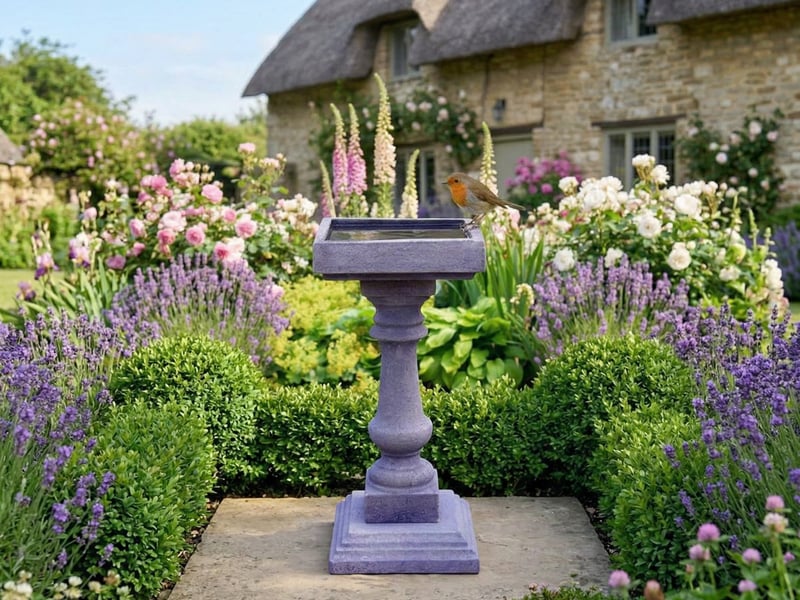
Many garden ornaments come in two or more pieces. A statue sits on a pedestal, an armillary on a column. Each joint is a weak point in a storm and an easy lift for a thief.
Secure each joint separately, bottom up:
- Fix the base or pedestal to the ground using bolts, adhesive, or mortar.
- Bond the next piece to the one below using exterior stone adhesive. Apply a generous bead and let it cure for 24 hours.
- If the top piece is removable (like a sundial plate or birdbath bowl), secure it with adhesive or a bolt through the mounting hole.
For high-value multi-piece ornaments, I also run a cable from the top piece down through all the joints to the ground anchor. If the adhesive fails in a storm, the cable catches the falling piece before it smashes on the paving.

|
Matt's Pick: worth securing properlyBest for: Statement garden centrepiece that needs theft and wind protection Why I recommend it: The Seated Gaia is one of our most popular cast stone pieces. At 299 pounds and around 35kg, it is heavy enough to resist wind but light enough for two people to carry off. I always recommend bolting or cabling pieces in this weight range. Price: £299 |
Seasonal securing checklist
| Season | Check | Why |
|---|---|---|
| Spring (March-April) | Inspect all fixings after winter frost. Re-apply any cracked adhesive bonds. | Frost-thaw cycles weaken adhesive and loosen bolts. |
| Summer (June-July) | Tighten cable anchors. Check motion sensor batteries. Test alerts. | Pre-holiday preparation. August is peak theft season. |
| Autumn (September-October) | Clear leaves from around bases. Check ornaments are level. | Wet leaves trap moisture against stone. Ground settles after dry summer. |
| Winter (November-December) | Move lightweight unsecured pieces to shelter. Check heavy pieces are stable. | Storm season brings sustained high winds. |
For advice on protecting ornaments from frost and weather damage, read our weatherproofing guide.
Insurance considerations for garden ornaments
Most UK home contents insurance covers garden items, but with conditions. Standard policies typically cover garden contents up to £500 to £1,000 total. High-value ornaments (over £500 each) usually need to be listed as specified items on your policy.
Some insurers require evidence of reasonable security measures for claims on garden theft. Photographic evidence of your securing method, receipts for fixings, and a clear record of what you own can all speed up a claim.
If you have a collection of ornaments worth £2,000 or more in total, speak to your insurer about specific cover. The premium increase is usually small compared to the replacement cost.
Common mistakes when securing garden ornaments
- Using indoor adhesive outdoors. Standard PVA, wood glue, and indoor silicone all fail within months in UK weather. Use only products marked for exterior use.
- Drilling into thin stone. Cast stone ornaments often have a hollow core with walls as thin as 15mm. Drilling through the wall cracks it. Only drill into the solid base section.
- Mixing metals. A galvanised bracket on a bronze statue causes galvanic corrosion. Both the bracket and the statue corrode faster. Use stainless steel fixings with all metals.
- Over-tightening on sandstone. Sandstone is soft. Too much torque on a masonry bolt splits the slab. Tighten until firm, then stop.
- Ignoring the base. Securing a statue to a pedestal is pointless if the pedestal itself is not secured to the ground. Always fix from the bottom up.
- Hiding ornaments for safety. A valuable ornament behind a fence or hedge is actually easier to steal because nobody can see the thief at work. Visibility is security.
Frequently asked questions
How do I stop garden ornaments falling over in wind?
Bolt them to paving or use stone adhesive for ornaments over 5kg. For lighter resin pieces, fill them with sand through the base drainage hole. Spiral ground anchors work well for ornaments sitting directly on soil. Any ornament under 15kg on an exposed site should be physically secured to the ground.
What is the best adhesive for sticking garden ornaments to paving?
Exterior-grade polyurethane construction adhesive or specialist stone adhesive. Products like Sika AnchorFix and Akemi stone adhesive are designed for outdoor stone-to-stone bonding. Standard silicone sealant has no structural strength and will fail. Both surfaces must be clean and dry before application, and the bond needs 24 hours to cure fully.
How do I secure a garden statue without drilling?
Use exterior stone adhesive or a steel cable with a screw-in ground anchor. Stone adhesive bonds the ornament to paving without any holes. Ground anchors screw into soil by hand. Both methods avoid drilling into either the ornament or the surface. For hollow resin pieces, filling with sand adds weight without any fixings at all.
Are garden ornaments covered by home insurance?
Yes, most UK home contents policies cover garden items up to £500 to £1,000. Items over £500 usually need to be specified individually on your policy. Keep photos and receipts. Some insurers require evidence of reasonable security for theft claims. Check your specific policy wording, as garden cover varies between providers.
How heavy does a garden ornament need to be to not blow over?
Over 30kg on a flat surface resists most UK wind conditions. Ornaments under 15kg will topple in 50-60mph gusts, which hit most of the UK several times each winter. Shape matters too. A tall, narrow statue is more vulnerable than a low, wide birdbath of the same weight. Exposed hilltop and coastal gardens face higher wind speeds and need extra securing.
How do I anchor a garden statue to grass?
Screw a galvanised spiral ground anchor 40-60cm into the soil and cable the statue to it. Use a steel bar through the anchor eye for leverage while screwing in. Thread a plastic-coated steel cable from the anchor around the statue base. For a permanent fix, pour a small concrete pad under the turf and bolt the statue to it. Both methods work on clay, loam, and sandy soils.
When is peak season for garden ornament theft in the UK?
August is the peak month, driven by summer holidays leaving gardens unattended. Warm months from May to September see the highest garden theft rates overall. Check all fixings and security before going away. Ask a neighbour to keep an eye on your garden. Visible deterrents like CCTV and motion-sensor lights reduce risk year-round, but matter most in summer.
Further reading
Matt W
Garden & Outdoor Specialist
Matt has spent over 16 years working hands-on with garden products across the UK. He tests materials in Staffordshire clay soil and hard water conditions, and writes from direct experience fitting, maintaining, and repairing everything from stone statues to cast iron furniture. His advice is based on what actually survives a British winter, not what looks good in a catalogue.